Creators
- PJ De Vos
Date published
- 2025-02-05T15:52:04Z
Citation
PJ De Vos. 2025. Rembrandt's Birthplace. PURE3D. https://editions.pure3d.eu/project/6/edition/1/index.html
Rights
- License
- All rights reserved.
- Rights holder
Erfgoed Leiden en Omstreken; Mr. The Rich
- Contact
See creator
Keywords
- Cityscape
- Leiden
- Rembrandt
- Vernacular Architecture
- mill
Audience
- general public
- students (secondary)
- students (university)
Funder
Countries
- Netherlands, Kingdom of the (NL)
Latitude/Longitude
52.15833, 4.49306
Place
Leiden
Period
- Early modern
Temporal
1573 to 1637
Subjects
- Archaeology
- Architecture
- Cultural Heritage
- History
Languages
- English (eng)
Sources
- Computer graphic reconstruction
Provenance
This edition was created for the PURE3D project as part of a suite of pilot projects that helped to develop the PURE3D infrastructure.
Content
Scene information
scene.svx.json
asset:
- copyright:
(c) Smithsonian Institution. All rights reserved. - generator:
Voyager - type:
application/si-dpo-3d.document+json - version:
1.0
- copyright:
cameras:
:
perspective:
- yfov:
52 - zfar:
8000000 - znear:
6000
- yfov:
- type:
perspective
lights:
:
color:
10.950.9
- intensity:
1 - shadowEnabled:
True - type:
directional
:
color:
0.90.951
- intensity:
0.7 - shadowEnabled:
True - type:
directional
:
color:
0.80.851
- intensity:
0.5 - type:
directional
:
color:
0.850.90783131
- intensity:
0.6 - type:
directional
metas:
:
articles:
(#4o51qJnCzqBT) Introduction:
- id:
4o51qJnCzqBT leads:
EN:
Whether you're a lover of Rembrand's work or interested in Dutch 16th century life, this presentation of the house of Rembrandt will walk you through the background, architecture and daily life of Leiden in the years after the siege of Leiden by the Spanish in 1573.
taglist:
- EN:
[]
- EN:
titles:
- EN:
Introduction
- EN:
uris:
- EN:
articles/introduction-en.html
- EN:
- id:
(#uQWWxYruCuDt) Locating the Birthplace of Rembrandt:
- id:
uQWWxYruCuDt leads:
EN:
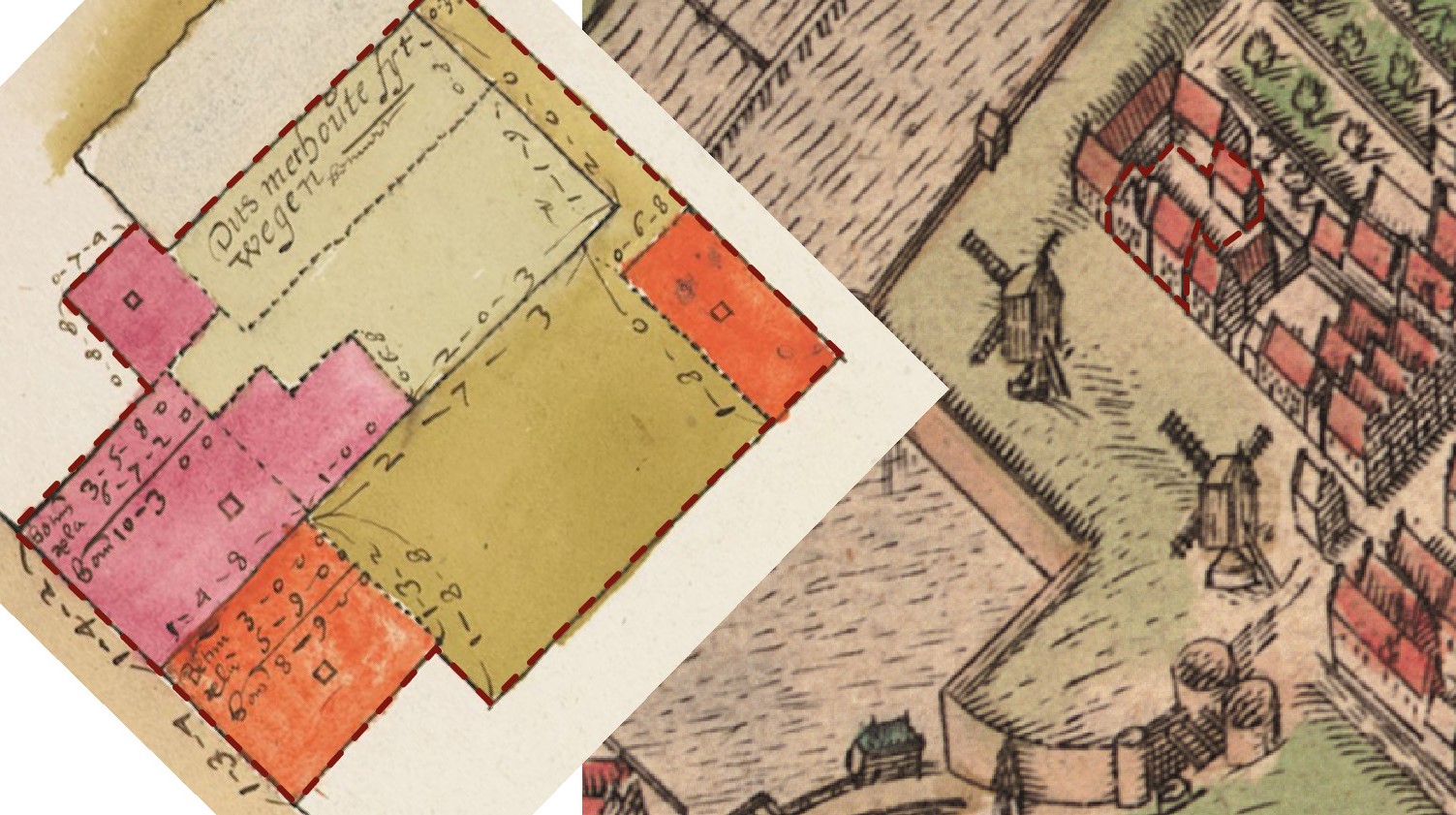
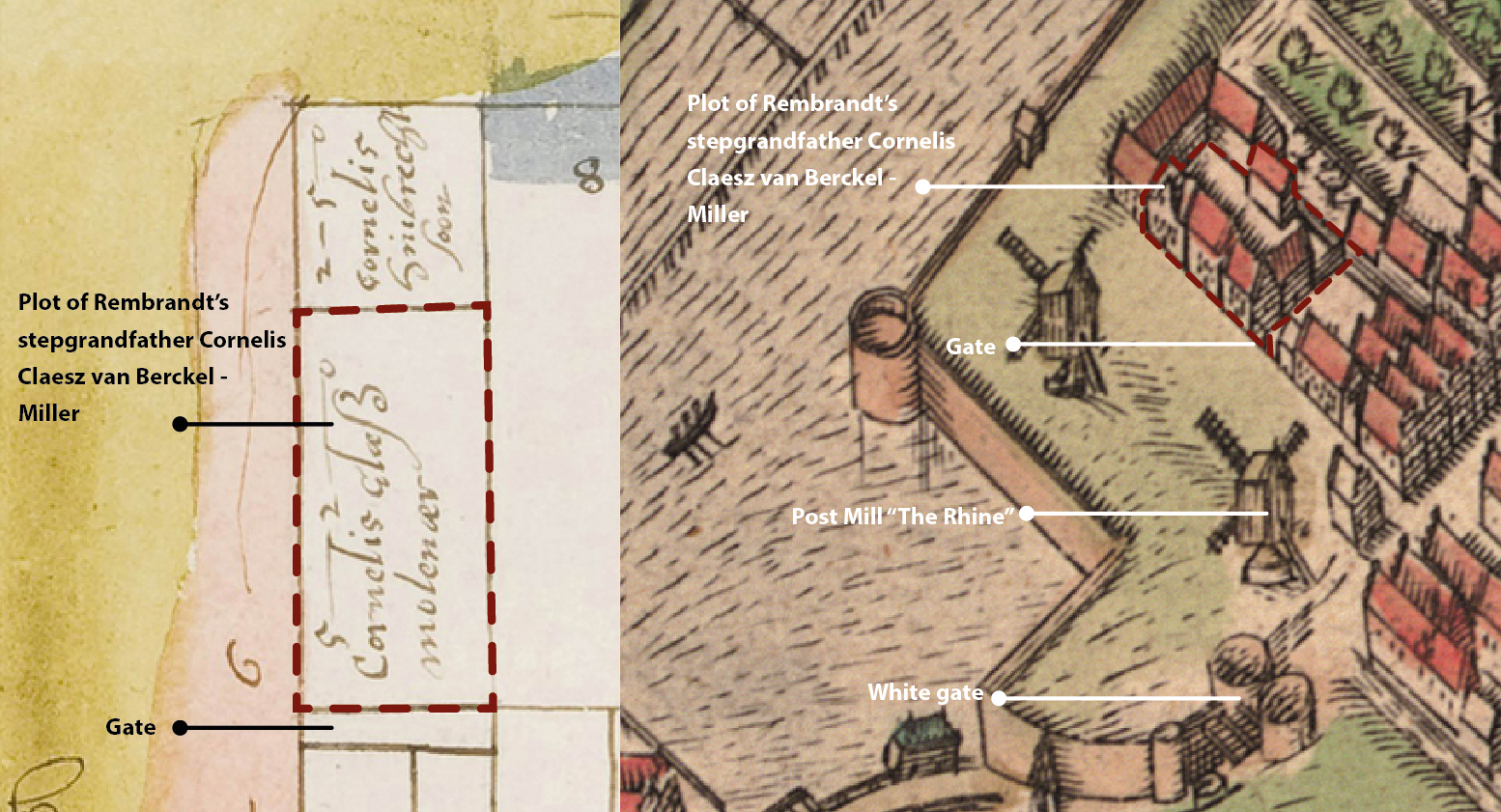
Nowadays the area where Rembrandt was born is far from what it must have looked like at the beginning of the seventeenth century. In preparation of the Rembrandt celebration of 2019, new research focused on how his birth house and the surroundings must have looked like.
taglist:
- EN:
[]
- EN:
titles:
- EN:
Locating the Birthplace of Rembrandt
- EN:
uris:
- EN:
articles/TheOriginalMillHouse.html
- EN:
- id:
(#gTQabtuZtIDb) Seeking protection for the Spanish:
- id:
gTQabtuZtIDb leads:
EN:
In 1573, because of the Spanish Siege, the grandparents of Rembrandt had to seek protection within the walls of Leiden. It meant abandoning their grain mill.
taglist:
- EN:
[]
- EN:
titles:
- EN:
Seeking protection for the Spanish
- EN:
uris:
- EN:
articles/Siege.html
- EN:
- id:
(#lJ95N9c8xi95) Erecting "the Rhine" - a post mill:
- id:
lJ95N9c8xi95 leads:
EN:
In the autumn of 1575, a year after the relief of Leiden, the grandmother of Rembrandt, bought a corn windmill - a post mill type - from Jan van der Does, lord of Noordwijk. It was named the Rhine after the river running nearby.
taglist:
- EN:
[]
- EN:
titles:
- EN:
Erecting "the Rhine" - a post mill
- EN:
uris:
- EN:
articles/therhine.html
- EN:
- id:
(#OpLOV8dbPNRh) Harnessing wind power:
- id:
OpLOV8dbPNRh leads:
EN:
During the Dutch Golden Century, the Netherlands became a major economic power in Europe, in part due to their innovative use of wind power to fuel their industries.
taglist:
- EN:
[]
- EN:
titles:
- EN:
Harnessing wind power
- EN:
uris:
- EN:
articles/windpower.html
- EN:
- id:
(#aLLDYj4evEzK) The Mill House of Claes Cornelisz.:
- id:
aLLDYj4evEzK leads:
EN:
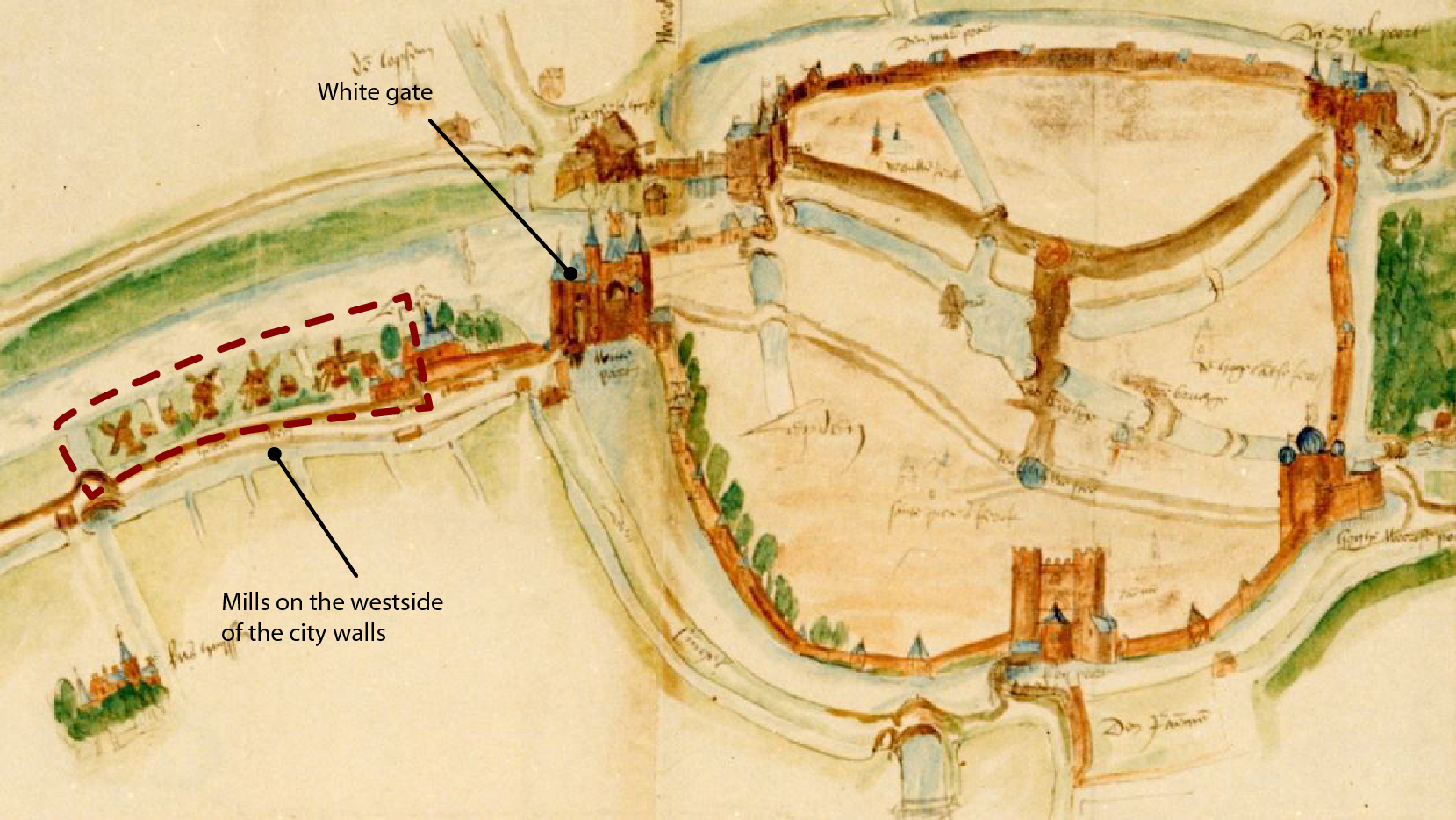
Rembrandt was born in the so-called Mill House belonging to his grandmother and his stepgrandfather Claes Cornelisz. van Berckel. Unlike one would think, the mill and the mill house were not interconnected. In fact they stood opposite eachother. The Mill was erected on the city wall, while the Mill House lay below on the street.
taglist:
- EN:
[]
- EN:
titles:
- EN:
The Mill House of Claes Cornelisz.
- EN:
uris:
- EN:
articles/architecture.html
- EN:
- id:
(#KzJwQnoxMSAs) Volumetric Study :
- id:
KzJwQnoxMSAs leads:
EN:
After pinpointing Rembrandt's exact birthplace, the second step in the reconstruction process was to conduct a volumentric study of what was known as the Mill House.
taglist:
- EN:
[]
- EN:
titles:
- EN:
Volumetric Study
- EN:
uris:
- EN:
articles/VolumetricStudy.html
- EN:
- id:
(#zb6g2YW3Zdw6) Sixteenth Century Architecture:
- id:
zb6g2YW3Zdw6 leads:
EN:
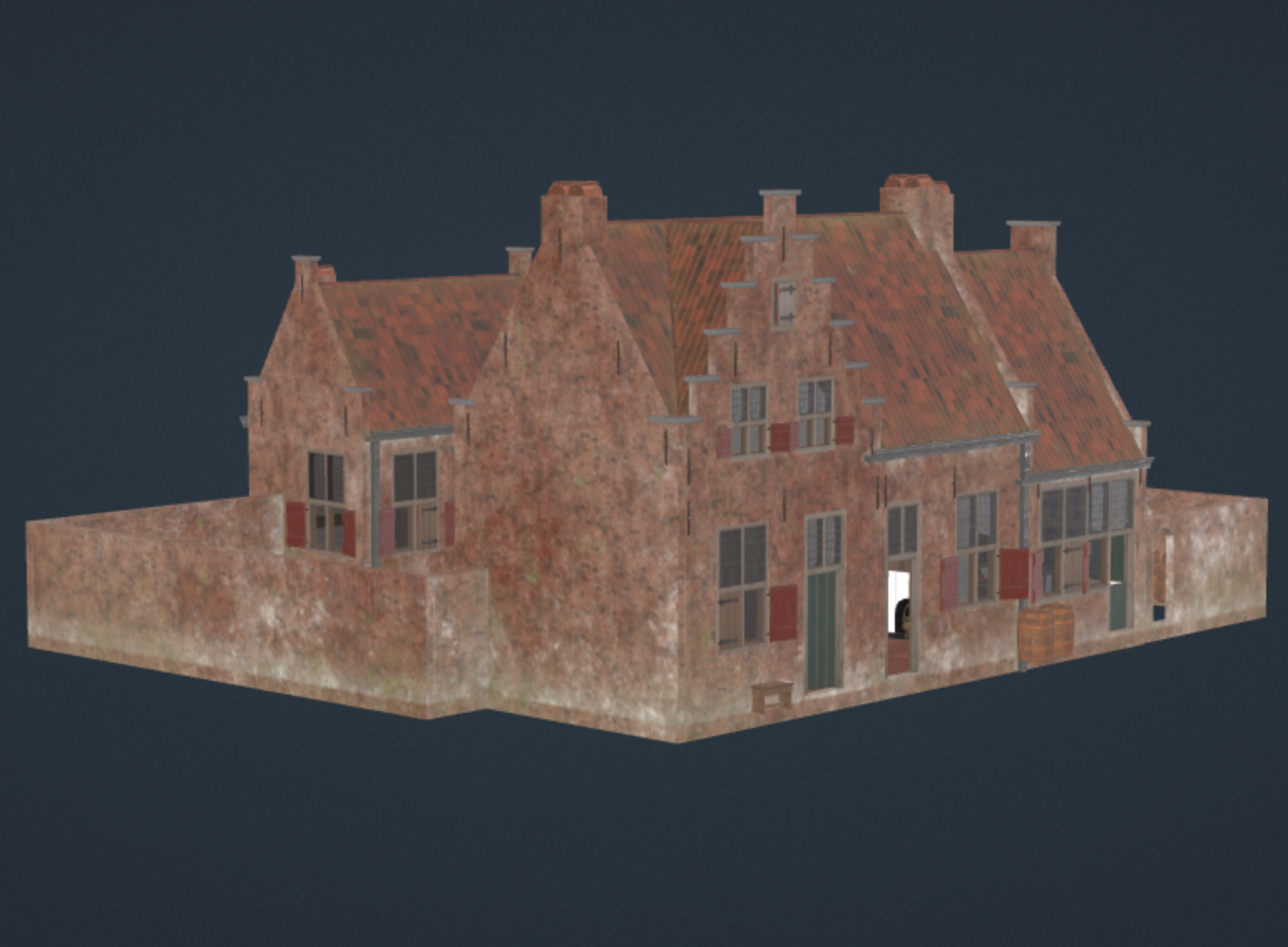
The Mill House is a fine example of sixteenth-century vernacular architecture. It is a typical one-story brick house with a dormer that has a stepped gable. All elements in the reconstruction are carefully chosen based on well documented examples, still present in Leiden.
taglist:
- EN:
[]
- EN:
titles:
- EN:
Sixteenth Century Architecture
- EN:
uris:
- EN:
articles/architecturenew.html
- EN:
- id:
(#oEJh76a8sKXd) Redeveloping the Mill House:
- id:
oEJh76a8sKXd leads:
EN:
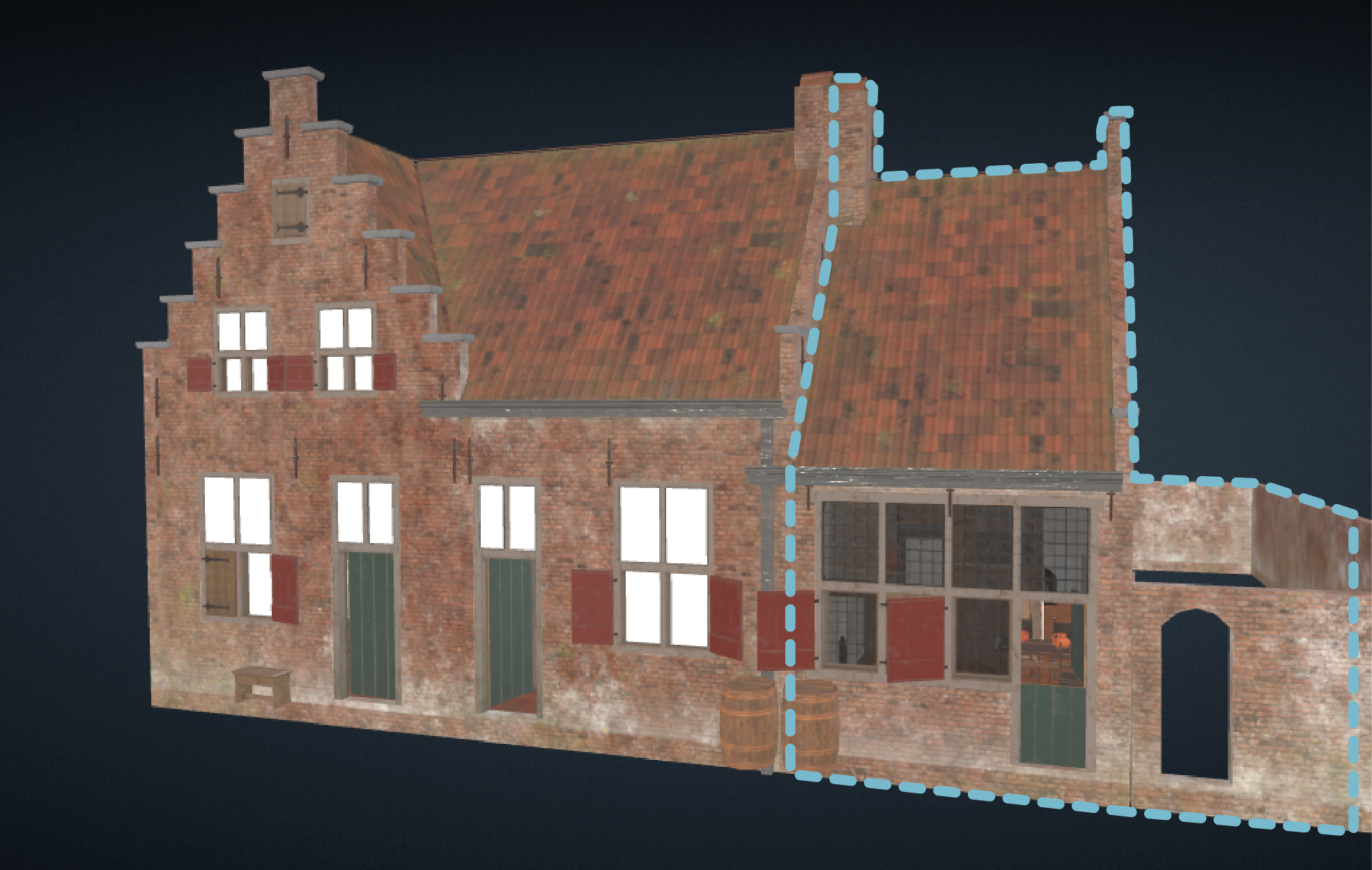
More than once the property was divided and extensions were built to house various family members. This efficient use of space is part of a bigger phenomenon in Leiden around the turn of the seventeenth century.
taglist:
- EN:
[]
- EN:
titles:
- EN:
Redeveloping the Mill House
- EN:
uris:
- EN:
articles/volumes.html
- EN:
- id:
(#dPY962RvyPPt) The Rembrandt House (1589):
- id:
dPY962RvyPPt leads:
EN:
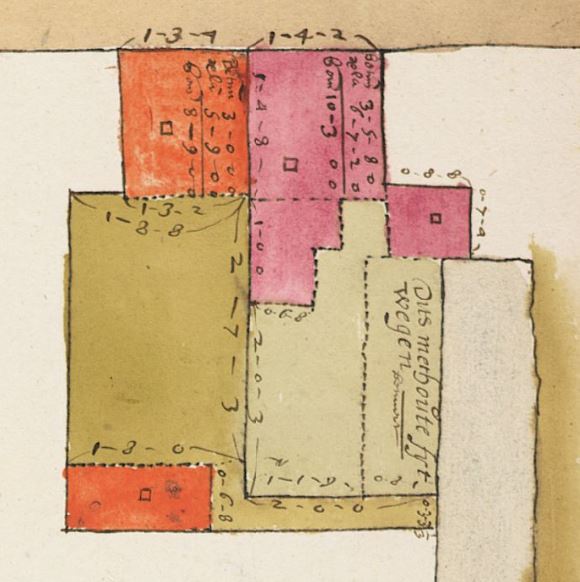
Just before Rembrandt's parents married in 1589, his father bought half of the Mill, including its tools, and also the southside of the Mill House together with the garden. This was the first step in de development of the birth house of Rembrandt.
taglist:
- EN:
[]
- EN:
titles:
- EN:
The Rembrandt House (1589)
- EN:
uris:
- EN:
articles/rembrandthouseone.html
- EN:
- id:
(#7T4bOJKhlhdl) The Rembrandt House (1600):
- id:
7T4bOJKhlhdl leads:
EN:
When Rembrandt's grandmother passed away in 1600, also the north part of the Mill House was divided among family members.
taglist:
- EN:
[]
- EN:
titles:
- EN:
The Rembrandt House (1600)
- EN:
uris:
- EN:
articles/1600.html
- EN:
- id:
(#sMJGu2ViusNx) Early Modern Brickwork:
- id:
sMJGu2ViusNx leads:
EN:
Leiden is the city of bricks. All the elements were present for a thriving export industry: clay as source material, turf for firing the kilns, and waterways for transportation.
taglist:
- EN:
[]
- EN:
titles:
- EN:
Early Modern Brickwork
- EN:
uris:
- EN:
articles/brickwork.html
- EN:
- id:
(#mXJD7EYxju8g) Cross-window:
- id:
mXJD7EYxju8g leads:
EN:
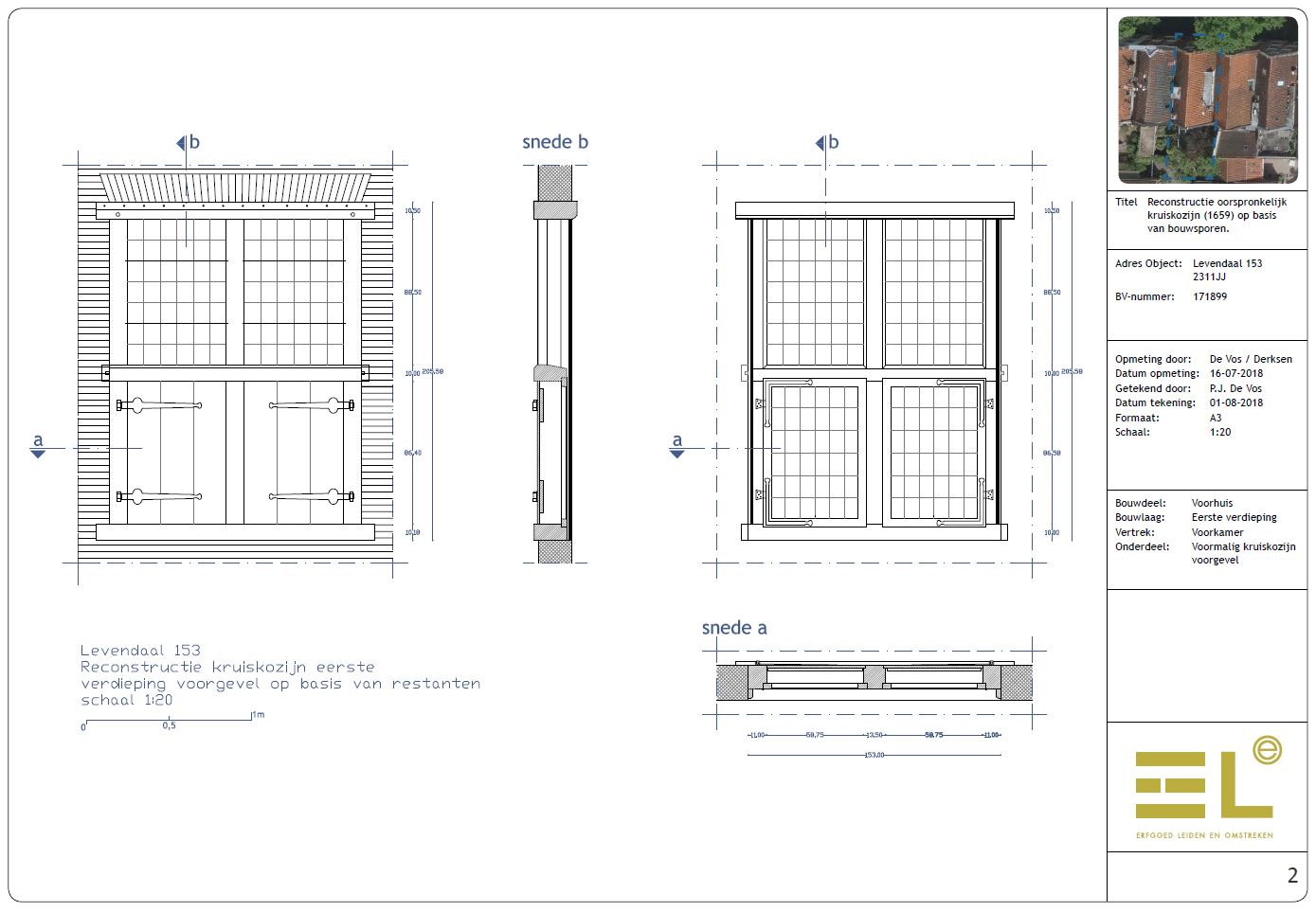
Until 1700, the use of wooden cross-windows was common in Leiden. They are still visible in several places in the city - for example at Levendaal 153, after which the model was created.
taglist:
- EN:
[]
- EN:
titles:
- EN:
Cross-window
- EN:
uris:
- EN:
articles/crosswindow.html
- EN:
- id:
(#rJ0hyMQ5iOdL) Roof Construction (ca. 1600):
- id:
rJ0hyMQ5iOdL leads:
EN:
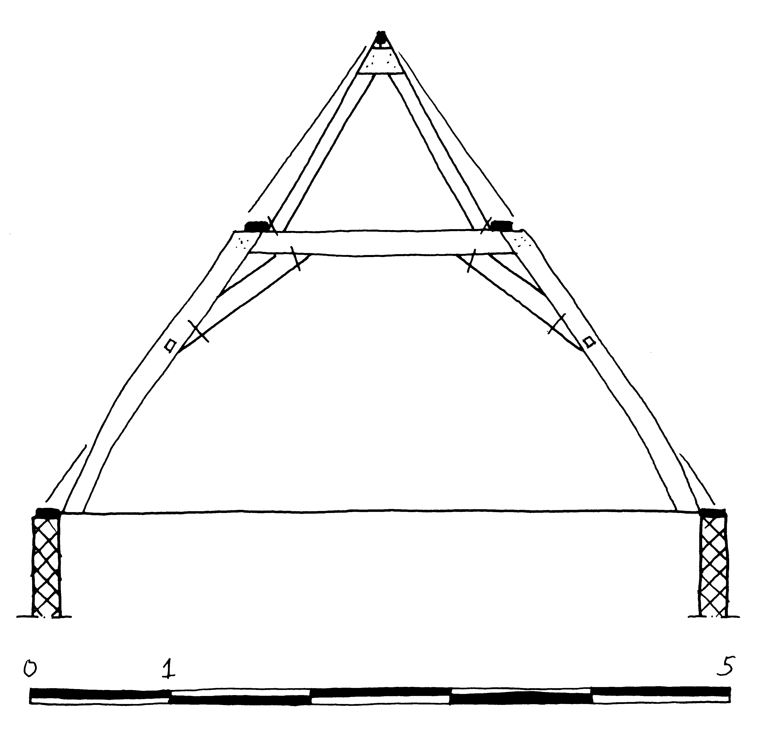
In vernacular architecture around the end of the sixteenth century, roof framings were composed of stacked trusses, with a roof pitch of 59 degrees.
taglist:
- EN:
[]
- EN:
titles:
- EN:
Roof Construction (ca. 1600)
- EN:
uris:
- EN:
articles/roofconstruction.html
- EN:
- id:
(#LYQM1tvwMZGY) Dutch Pantiles (>1545):
- id:
LYQM1tvwMZGY leads:
EN:
The roofs of ordinary Leiden houses around 1600 are covered with so-called Dutch pantiles. This locally produced product has been in use since the middle of the 16th century and was extremely popular for various reasons.
taglist:
- EN:
[]
- EN:
titles:
- EN:
Dutch Pantiles (>1545)
- EN:
uris:
- EN:
articles/roofing.html
- EN:
- id:
(#2zsoQ9rW4JtF) Sleeping and storage:
- id:
2zsoQ9rW4JtF leads:
EN:
During Rembrandt's time, it was common for people to sleap in cupboard-beds. In Leiden, typically cupboard-beds were ingeniously combined with a storage cellar underneeth.
taglist:
- EN:
[]
- EN:
titles:
- EN:
Sleeping and storage
- EN:
uris:
- EN:
articles/sleeping-and-storage-en.html
- EN:
- id:
(#R7GzxIrHyTJ3) Fly-through:
- id:
R7GzxIrHyTJ3 leads:
EN:
This fly-through provides a good insight on the location of the Mill House in relation to the city wall, the white gate and of course the Rhine - the post mill that was operated by his family.
taglist:
- EN:
[]
- EN:
titles:
- EN:
Fly-through
- EN:
uris:
- EN:
articles/flytrough.html
- EN:
- id:
(#MkM22IOETwJY) End of Tour:
- id:
MkM22IOETwJY leads:
- EN:
''
- EN:
taglist:
- EN:
[]
- EN:
titles:
- EN:
End of Tour
- EN:
uris:
- EN:
articles/end-of-tour-en.html
- EN:
- id:
(#4dIWIIbnykZw) References tour one: "The Mill House":
- id:
4dIWIIbnykZw leads:
- EN:
''
- EN:
titles:
- EN:
References tour one: "The Mill House"
- EN:
uris:
- EN:
articles/referencesone.html
- EN:
- id:
(#fHzY1uEEeXHT) References tour two: "Sixteenth Century Architecture":
- id:
fHzY1uEEeXHT leads:
- EN:
''
- EN:
taglist:
- EN:
[]
- EN:
titles:
EN:
References tour two: "Sixteenth Century Architecture"
uris:
- EN:
articles/referencestwo.html
- EN:
- id:
collection:
titles:
- EN:
The Mill House
- EN:
:
collection:
titles:
- EN:
Rembrandt's Birthplace
- EN:
models:
:
annotations:
(#VI84Bc9lqWI5) Roof-cladding:
- articleId:
LYQM1tvwMZGY color:
00.610.87
direction:
-0.00831440.0055563.94e-05
- id:
VI84Bc9lqWI5 leads:
EN:
The roofs of ordinary Leiden houses around 1600 are covered with so-called Dutch pantiles. This locally produced product has been in use since the middle of the 16th century and was extremely popular for various reasons.
position:
-822.3225791138.4952218-198.9793836
- scale:
156.0262958 - style:
Extended taglist:
- EN: [
Exterior]
- EN: [
titles:
- EN:
Roof-cladding
- EN:
- visible:
0
- articleId:
(#50IUXa2WofS5) Cross Windows:
- articleId:
mXJD7EYxju8g color:
00.610.87
direction:
-0.00999983.97e-054.51e-05
- id:
50IUXa2WofS5 leads:
EN:
Until 1700, the use of cross-windows was common in Leiden. The design features a center post and intermediate sill that divide the frame into four. The two upper sections are provided with leaded glass until about 1650, afterwards also with glass in wooden rods. The bottom two window openings have wooden turning shutters. Wooden cross windows are still visible in several places in the city centre and have been documented in building history research. Cross-windows can be seen nowadays in the side facade of the city carpenter’s yard (1611) on the Smidsteeg.
position:
-967.6385498-295.4356791-826.2914659
- scale:
156.0262958 - style:
Extended taglist:
- EN: [
Exterior]
- EN: [
titles:
- EN:
Cross Windows
- EN:
- visible:
0
- articleId:
(#MBXHUKt4IRoH) Heating and kitchen:
color:
010
direction:
3.92e-05-1.24e-05-0.0099999
- id:
MBXHUKt4IRoH leads:
EN:
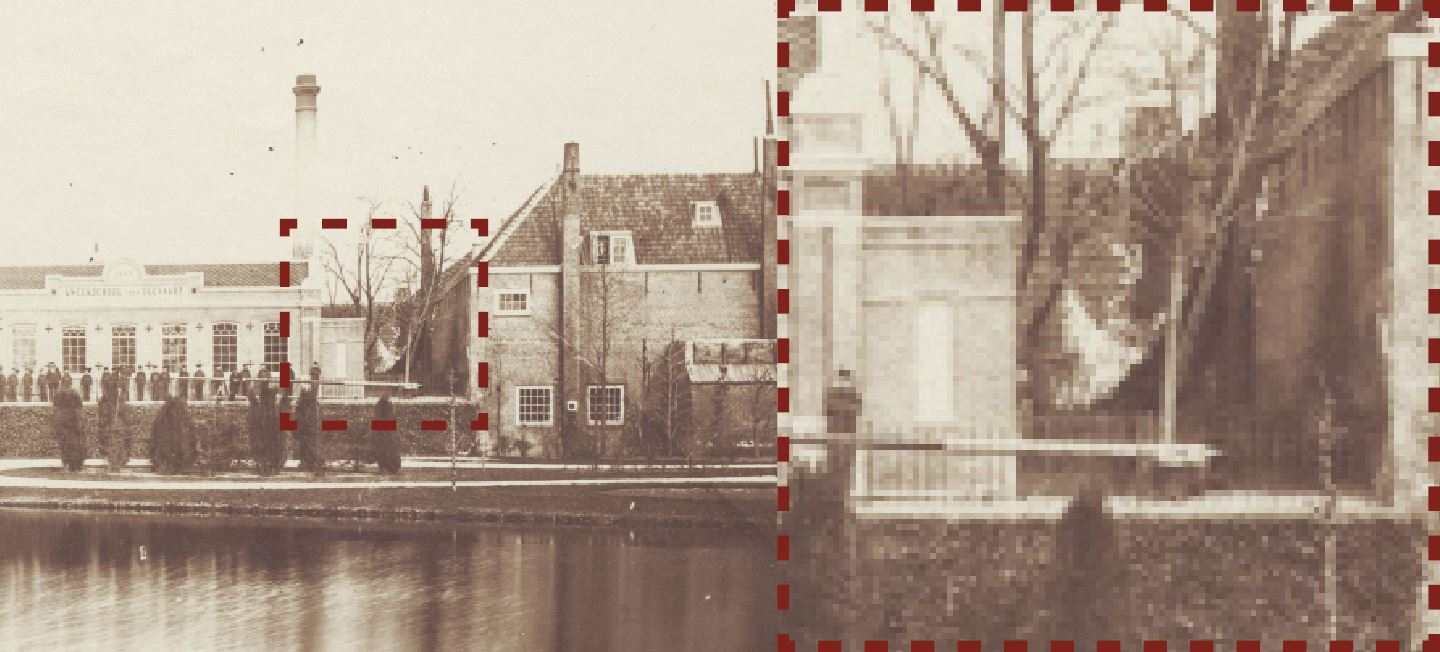
For basic comfort an inglenook fireplace for heating and cooking is indispensable. An old postcard of the Weddesteeg shows a building, on the spot where Rembrandt’s house once stood, with part of a tiled fireplace visible.
position:
-669.3956035-412.597172360.5477795
- scale:
156.0262958 - style:
Extended taglist:
- EN: [
Interior]
- EN: [
titles:
- EN:
Heating and kitchen
- EN:
- visible:
0
(#bRbs9LcSRTVS) Sleeping and storage:
- articleId:
2zsoQ9rW4JtF color:
010
direction:
0.0002740.00927860.0037193
- id:
bRbs9LcSRTVS leads:
EN:
During Rembrandt's time, it was common for people to sleep in cupboard-beds, which were essentially enclosed spaces where individuals slept half-sitting up. Typically located in the darkest areas of the house, such as corners or between rooms, the cupboard-bed was often placed near the fireplace for warmth. Made primarily of wood, the design aimed to prevent the cold from penetrating the structure. The floor of the cupboard-bed was generally less than a meter above the room's floor, allowing for easy entry and exit. Furthermore, underneath the cupboard-bed was a storage cupboard that provided a dark space. By lowering the floor beneath the cupboard-bed by about a meter, a small, chilly cellar could be created to store root vegetables and other foodstuffs, serving as a precursor to modern-day refrigeration.
position:
-579.3733523-450.9948961-319.3791856
- scale:
156.0262958 - style:
Extended taglist:
- EN: [
Interior]
- EN: [
titles:
- EN:
Sleeping and storage
- EN:
- visible:
0
- articleId:
(#pwgz9YDo7sWY) Floor:
color:
010
direction:
3.92e-050.0099998-3.92e-05
- id:
pwgz9YDo7sWY leads:
EN:
The floor in ordinary people’s houses usually consists of red fired tiles. These can be simply red and unglazed, or glazed in different colours like yellow, green and black. Apart from the different styles the tiles can be laid in different patterns, like chequers, stretcher bond or diagonals. For comfort and to avoid cold feet in some cases a wooden floor is laid down, sometimes only in part of the house.
position:
-572.5796037-544.3955749-114.6967811
- scale:
156.0262958 - style:
Extended taglist:
- EN: [
Interior]
- EN: [
titles:
- EN:
Floor
- EN:
- visible:
0
(#79SqYbAlT9A7) Newly built little house:
color:
100
direction:
-3.91e-050.00542920.0083977
- id:
79SqYbAlT9A7 leads:
EN:
This little house was bought in 1589 by Rembrandt’s father together with the southside of the Mill House. The bill of sale describes it as ‘a newly built little house’ (Nieut gemaeckt huysken).
position:
-102.5407477-175.561869469.8484537
- scale:
156.0262958 - style:
Extended taglist:
- EN: [
Buildings]
- EN: [
titles:
- EN:
Newly built little house
- EN:
- visible:
0
(#rnNuxz6syh1H) The new back annex:
color:
100
direction:
-0.00837450.0054653.93e-05
- id:
rnNuxz6syh1H leads:
EN:
In 1600 Rembrandt’s father inherited this newly built back annex (‘’t nieuwe achterhuysgen"). The inheritance was conditional. His aunt is allowed to live here till she dies. Rembrandt probably never knew this great-aunt. By the time of his birth in 1606 the house is rented out.
position:
575.406243640.0281899-182.1033397
- scale:
156.0262958 - style:
Extended taglist:
- EN: [
Buildings]
- EN: [
titles:
- EN:
The new back annex
- EN:
- visible:
0
(#gicAWp1WuOS9) Brickwork :
- articleId:
sMJGu2ViusNx color:
00.610.87
direction:
3.92e-05-3.92e-050.0099998
- id:
gicAWp1WuOS9 leads:
EN:
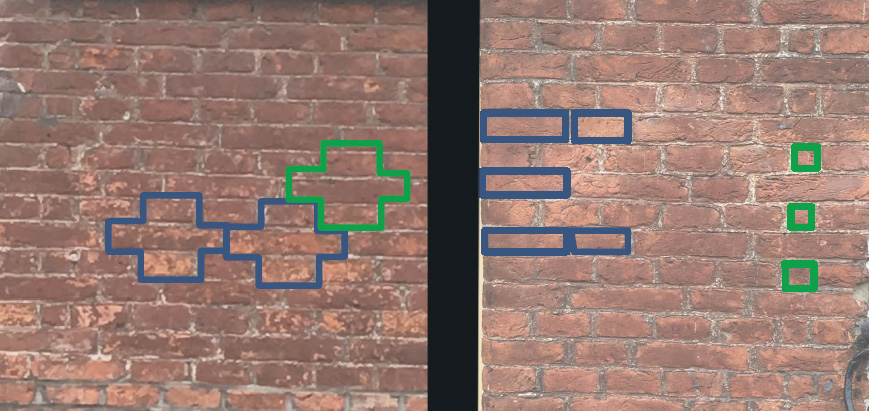
Leiden is a city of bricks. Due to the presence of iron rich clay and turf, both the ground material and the fuel required for baking were widely available. Therefore Leiden already in the fifteenth century made the transition from timber houses to brickbuild houses.
position:
-774.4044659-94.9764535497.9778911
- scale:
156.0262958 - style:
Extended taglist:
- EN: [
Exterior]
- EN: [
titles:
- EN:
Brickwork
- EN:
- visible:
0
- articleId:
(#kHzhECgv7Wue) Roof Construction:
- articleId:
rJ0hyMQ5iOdL color:
00.610.87
direction:
-0.00827790.00561023.92e-05
- id:
kHzhECgv7Wue leads:
EN:
In vernacular architecture around the end of the sixteenth century, roof framings were composed of stacked trusses, with a roof pitch of 59 degrees.
position:
-816.006887256.360058217.061182
- scale:
156.0262958 - style:
Extended taglist:
- EN: [
Exterior]
- EN: [
titles:
- EN:
Roof Construction
- EN:
- visible:
0
- articleId:
(#i96v6uEayckg) The Rhine:
- articleId:
lJ95N9c8xi95 color:
0.50.50.5
direction:
3.92e-050.0099998-3.92e-05
- id:
i96v6uEayckg leads:
EN:
Rembrandt was born in the so-called "Mill House". Contrary to what one might think, the house was not connected to the mill, which was erected on top of the city wall.
- marker:
Post Mill position:
-1503.347883-553.6373937196.5894223
- scale:
156.0263289 - style:
Circle taglist:
- EN:
[]
- EN:
titles:
- EN:
The Rhine
- EN:
- articleId:
(#3GjRw8uXq85P) Rainwater:
color:
00.610.87
direction:
-0.00887730.0005923-0.0045654
- id:
3GjRw8uXq85P leads:
EN:
By the end of the sixteenth century, the city became more and more dependent on the collection of rainwater. Because of demographic growth and intensive industrialization of the city, the canals and even groundwater became polluted. Most households collected rainwater in wooden barrels. At the beginning of the seventeenth century, the first underground cisterns appeared. They became commonplace in early modern times until in the nineteenth century a tap water system was constructed, in which water was supplied from the dunes.
position:
-1043.057298-486.845302194.5366219
- scale:
156.0263 - style:
Extended taglist:
- EN: [
Exterior]
- EN: [
titles:
- EN:
Rainwater
- EN:
- visible:
0
(#JbSN7AQcZizt) Anchor Plate:
color:
00.610.87
direction:
-0.00176466.31e-05-0.0098429
- id:
JbSN7AQcZizt leads:
EN:
An anchor plate is a wrought iron anchor that connects a wooden structure via a tie rod to a wall. In more striking houses, these anchors were designed with decorative curls or showed the year of construction. In Leiden, the anchors are usually quite simple in design.
position:
-824.1924582108.7307385-1007.1745018
- scale:
156.0263 - style:
Extended taglist:
- EN: [
Exterior]
- EN: [
titles:
- EN:
Anchor Plate
- EN:
- visible:
0
(#ukpHCtEm3ixz) Wooden lower front:
color:
00.610.87
direction:
-0.00999983.97e-054.51e-05
- id:
ukpHCtEm3ixz leads:
EN:
In the seventeenth century on the street side of the ground level the facade had a wooden front. The wooden front allowed for a maximum of daylight in the dwelling.
position:
-967.6385498-319.9306776248.1211186
- scale:
156.0262958 - style:
Extended taglist:
- EN: [
Exterior]
- EN: [
titles:
- EN:
Wooden lower front
- EN:
- visible:
0
(#J7xukjGzJk4X) Southside of the Mill House:
- articleId:
dPY962RvyPPt color:
100
direction:
-0.00827790.00561023.92e-05
- id:
J7xukjGzJk4X leads:
EN:
Just before Rembrandt's parents married in 1589, his father bought this house together with the volume behind.
position:
-792.165369491.7652332276.0100885
- scale:
156.0262958 - style:
Extended taglist:
- EN: [
Buildings]
- EN: [
titles:
- EN:
Southside of the Mill House
- EN:
- visible:
0
- articleId:
(#0taHA3y1C432) The middle part of the Mill House:
- articleId:
7T4bOJKhlhdl color:
100
direction:
-0.00831440.0055563.94e-05
- id:
0taHA3y1C432 leads:
EN:
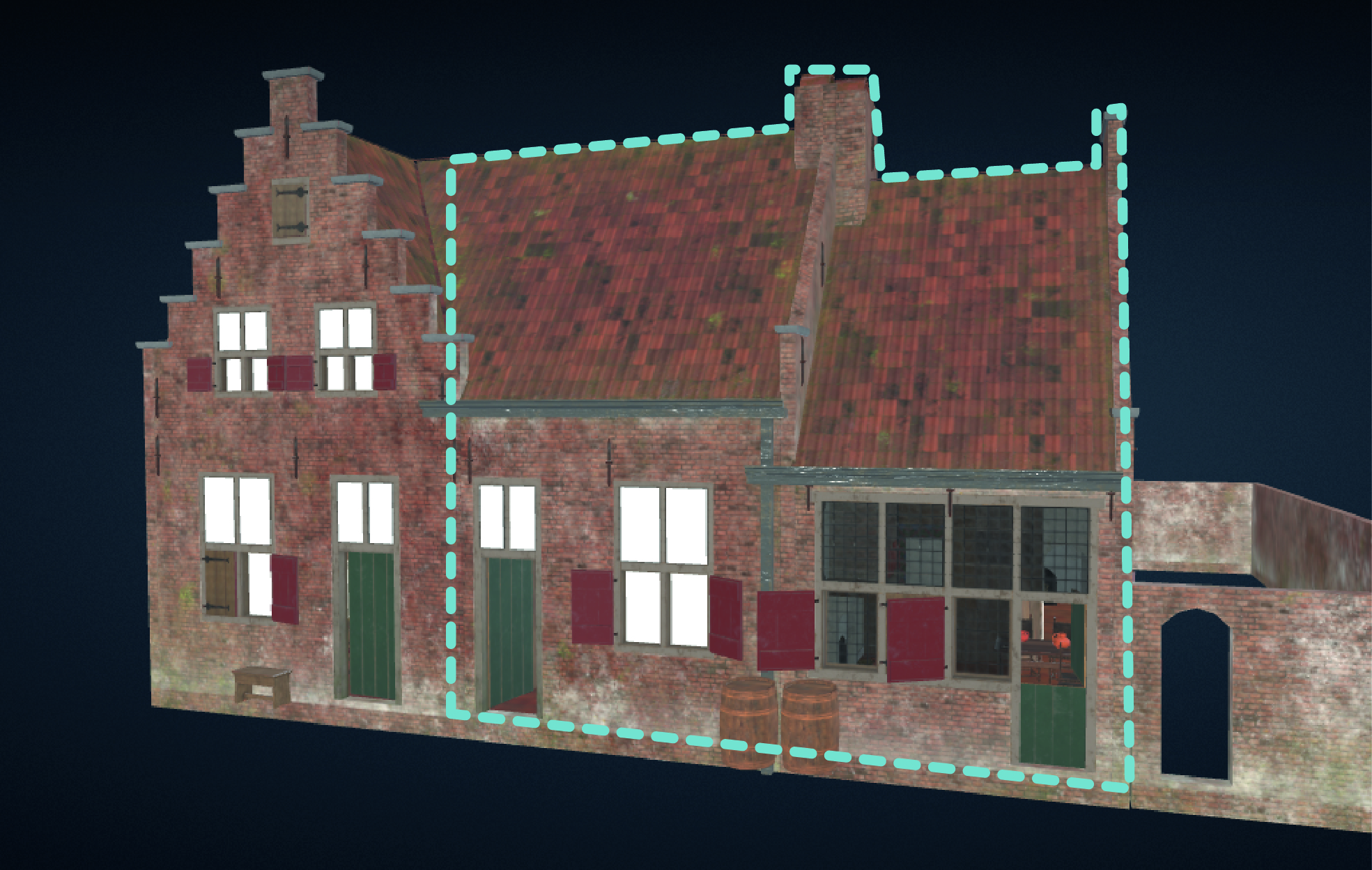
When Rembrandt's grandmother passed away in 1600, also the north part of the Mill house was divided. The northernmost side with the stepped gable was inherited by Rembrandt's cousins, while the middle parts was inherited by the father of Rembrandt.
position:
-870.483251466.6120061-178.297069
- scale:
156.0262958 - style:
Extended taglist:
- EN: [
Buildings]
- EN: [
titles:
- EN:
The middle part of the Mill House
- EN:
- visible:
0
- articleId:
(#GGVls2RS3Isv) The north side of the Mill House:
color:
100
direction:
-0.00999983.92e-05-3.93e-05
- id:
GGVls2RS3Isv leads:
EN:
After the division of the inheritance of Rembrandt's grandmother in 1600, the northern part of the Mills house became the property of Rembrandt's cousins. Sources state that also Rembrandt's stepgrandfather - Claes Cornelisz. van Berckel - remained living here until he passed away.
position:
-968.7085221128.1239398-730.1175747
- scale:
156.0262958 - style:
Extended taglist:
- EN: [
Buildings]
- EN: [
titles:
- EN:
The north side of the Mill House
- EN:
- visible:
0
(#S1H1cMgUO2u4) Garden:
color:
100
direction:
3.92e-050.0099998-3.92e-05
- id:
S1H1cMgUO2u4 leads:
EN:
The garden proved to be key in locating the original birth house of Rembrandt. It remained unbuilt throughout the first half of the seventeenth century, which is quite remarkable since demographic pressure caused most available plots to be developed.
position:
-522.7921056-553.6373233720.5143727
- scale:
156.0262958 - style:
Extended taglist:
- EN: [
Buildings]
- EN: [
titles:
- EN:
Garden
- EN:
- visible:
0
boundingBox:
max:
2393.73805241158.16359081640.0604269
min:
-1027.9790192-68.9488748-1781.657447
derivatives:
:
assets:
:
- type:
Model - uri:
millhouse.glb
- quality:
Medium - usage:
Web3D
translation:
-682.8795166-544.6072470
- units:
m
nodes:
(Camera):
- camera:
0 - name:
Camera rotation:
0.0237520.86534490.0411967-0.4989156
scale:
111
translation:
-3797246.8938414267665.2815249-2231968.9399776
- camera:
(Lights):
children:
2345
- name:
Lights rotation:
00.8663250-0.4994807
scale:
156026.3289029156026.3289029156026.3289029
(Key):
- light:
0 - name:
Key rotation:
0.4829741-0.10707280.18809980.8484633
scale:
111
translation:
002
- light:
(Fill #1):
- light:
1 - name:
Fill #1 rotation:
0.35469690.163893-0.38610770.8356136
- light:
(Fill #2):
- light:
2 - name:
Fill #2 rotation:
0.9374013-0.30186930.05322770.1652891
translation:
001
- light:
(Rim):
- light:
3 - name:
Rim rotation:
0.3732560.6426073-0.57860630.3360813
scale:
111
translation:
10-1
- light:
(building):
- meta:
0 - model:
0 - name:
building
- meta:
- scene:
0 scenes:
:
- meta:
1 - name:
Scene nodes:
016
- setup:
0 - units:
mm
setups:
:
background:
color0:
0.20.250.3
color1:
0.010.030.05
- style:
RadialGradient
environment:
- index:
0
- index:
floor:
color:
0.60.750.8
- opacity:
0.5 position:
21417.6046048-1358516.0952259-21783.0582375
- receiveShadow:
0 - size:
4080475.9683628 - visible:
0
grid:
color:
0.50.70.8
- visible:
0
interface:
- logo:
True - menu:
True - tools:
True - visible:
True
- logo:
language:
- language:
EN
- language:
navigation:
- autoRotation:
0 - autoZoom:
True - enabled:
True - lightsFollowCamera:
True orbit:
maxOffset:
- no value
- no value
10000
maxOrbit:
90- no value
- no value
minOffset:
- no value
- no value
0.1
minOrbit:
-90- no value
- no value
offset:
-29585.5900226-151643.92699762613674.9375499
orbit:
-5.5222104-120.09086850
- type:
Orbit
- autoRotation:
reader:
- enabled:
0 - position:
Overlay
- enabled:
slicer:
- axis:
X - enabled:
0 - inverted:
0 - position:
0.5
- axis:
snapshots:
features:
interfacereaderviewernavigation
states:
(#7IaKvQ):
- curve:
EaseOutQuad - duration:
1.5 - id:
7IaKvQ - threshold:
0.5026954 values:
TruegTQabtuZtIDb3:
-2.2751367-89.63479570
4:
23228.1781967-98744.16573763174980.0636023
0''''01
- curve:
(#yjgdnQ):
- curve:
EaseOutQuad - duration:
1.5 - id:
yjgdnQ values:
0uQWWxYruCuDt3:
2.267554-124.71257290
4:
235178.8125831-103355.47377372566392.7635604
0''''01
- curve:
(#GDqSLa):
- curve:
EaseOutQuad - duration:
1.5 - id:
GDqSLa values:
TruelJ95N9c8xi953:
-90-89.9251330
4:
57681.206066-227011.89251512566392.7635604
True''''01
- curve:
(#dFTufY):
- curve:
EaseOutQuad - duration:
1.5 - id:
dFTufY values:
TruedPY962RvyPPt3:
4.3580291-91.10883260
4:
365921.6801942-75993.24206442263716.9054846
0''''01
- curve:
(#JS4WJv):
- curve:
EaseOutQuad - duration:
1.5 - id:
JS4WJv values:
0''3:
-31.87478515.19989220
4:
94070.9159322-326480.49432791362080.4328392
True79SqYbAlT9A7Volumes, Partitions, Buildings01
- curve:
(#AG7qzO):
- curve:
EaseOutQuad - duration:
1.5 - id:
AG7qzO values:
0''3:
-54.8349562-48.18459840
4:
207803.9303911134797.77737681035871.2005215
TruernNuxz6syh1HVolumes, Partitions, Buildings01
- curve:
(#SVTx9C):
- curve:
EaseOutQuad - duration:
1.5 - id:
SVTx9C values:
TrueuQWWxYruCuDt3:
0.8988791-72.29992910
4:
-105040.8820049-97073.44644782566392.7635604
0''''01
- curve:
(#tVqfib):
- curve:
EaseOutQuad - duration:
1.5 - id:
tVqfib values:
TrueaLLDYj4evEzK3:
-5.9002451-107.03867310
4:
124573.7392823-314678.62968943159422.6612906
True''Exterior01
- curve:
(#ovKtPX):
- curve:
EaseOutQuad - duration:
1.5 - id:
ovKtPX values:
0''3:
-2.0125869-111.32890490
4:
42681.6127283-187126.30144262579030.0106124
True''Exterior01
- curve:
(#GvMlOu):
- curve:
EaseOutQuad - duration:
1.5 - id:
GvMlOu values:
0dPY962RvyPPt3:
-80.3196873-61.53240530
4:
79205.2293012-276827.32520372773150.5490456
True''Volumes, Partitions, Buildings01
- curve:
(#3SLzdZ):
- curve:
EaseOutQuad - duration:
1.5 - id:
3SLzdZ values:
TrueoEJh76a8sKXd3:
-80.3196873-61.53240530
4:
79205.2293012-276827.32520372773150.5490456
True''Volumes01
- curve:
(#YxSPxa):
- curve:
EaseOutQuad - duration:
1.5 - id:
YxSPxa values:
True7T4bOJKhlhdl3:
-66.19899-69.55420620
4:
18871.5019453-514068.46766482866977.658251
True''Volumes01
- curve:
(#HpfxOn):
- curve:
EaseOutQuad - duration:
1.5 - id:
HpfxOn values:
0''3:
-11.8666588-74.8731230
4:
-276007.6676795-275363.84888292028994.322137
True0taHA3y1C432Volumes, Partitions, Buildings01
- curve:
(#VT9PKb):
- curve:
EaseOutQuad - duration:
1.5 - id:
VT9PKb values:
0''3:
-11.8666588-74.8731230
4:
-605303.4675017-288668.72968382028994.322137
TrueGGVls2RS3IsvVolumes, Partitions, Buildings01
- curve:
(#JgJyEI):
- curve:
EaseOutQuad - duration:
1.5 - id:
JgJyEI values:
0''3:
1.5301775-116.72910390
4:
778306.3672813-130369.78682161776661.089641
TrueJ7xukjGzJk4XVolumes, Partitions, Buildings01
- curve:
(#Q5s00z):
- curve:
EaseOutQuad - duration:
1.5 - id:
Q5s00z values:
TrueR7GzxIrHyTJ33:
2.1553097-89.0628290
4:
-80628.2277748-134041.59745692313053.5272362
TruernNuxz6syh1H''01
- curve:
(#j5ff32):
- curve:
EaseOutQuad - duration:
1.5 - id:
j5ff32 values:
True4dIWIIbnykZw3:
2.1553097-89.0628290
4:
-80628.2277748-134041.59745692313053.5272362
TruernNuxz6syh1H''01
- curve:
(#3ow8aJ):
- curve:
EaseOutQuad - duration:
1.5 - id:
3ow8aJ values:
Truezb6g2YW3Zdw63:
4.9539801-91.28134470
4:
87826.2657417-85280.57988452144043.6957536
0''''01
- curve:
(#EGvLg0):
- curve:
EaseOutQuad - duration:
1.5 - id:
EGvLg0 values:
0''3:
-1.3317342-91.28134470
4:
35225.216586-190482.6781962454715.6272683
True''Exterior01
- curve:
(#Y55G1z):
- curve:
EaseOutQuad - duration:
1.5 - id:
Y55G1z values:
0''3:
-2.9031628-45.18610660
4:
35225.216586-190482.6781961477004.5300214
TruegicAWp1WuOS9Exterior01
- curve:
(#WABvyZ):
- curve:
EaseOutQuad - duration:
1.5 - id:
WABvyZ values:
TruesMJGu2ViusNx3:
-2.9031628-45.18610660
4:
35225.216586-190482.6781961477004.5300214
TruegicAWp1WuOS9Exterior01
- curve:
(#aQFEJd):
- curve:
EaseOutQuad - duration:
1.5 - id:
aQFEJd values:
0sMJGu2ViusNx3:
2.858742-117.47182090
4:
35225.216586-190482.6781962071575.2598332
True50IUXa2WofS5Exterior01
- curve:
(#MlyIIJ):
- curve:
EaseOutQuad - duration:
1.5 - id:
MlyIIJ values:
TruemXJD7EYxju8g3:
2.858742-117.47182090
4:
35225.216586-190482.6781962071575.2598332
True50IUXa2WofS5Exterior01
- curve:
(#RzZxHc):
- curve:
EaseOutQuad - duration:
1.5 - id:
RzZxHc values:
0mXJD7EYxju8g3:
-43.2364961-64.5670590
4:
-392727.0189613-583797.5839821898383.0300856
TruekHzhECgv7WueExterior01
- curve:
(#z38b8Y):
- curve:
EaseOutQuad - duration:
1.5 - id:
z38b8Y values:
TruerJ0hyMQ5iOdL3:
-43.2364961-64.5670590
4:
-392727.0189613-583797.5839821898383.0300856
TruekHzhECgv7WueExterior01
- curve:
(#1E7Pbm):
- curve:
EaseOutQuad - duration:
1.5 - id:
1E7Pbm values:
0mXJD7EYxju8g3:
-6.5698294-57.75753520
4:
-392727.0189613-583797.5839821898383.0300856
True3GjRw8uXq85PExterior01
- curve:
(#b95xvS):
- curve:
EaseOutQuad - duration:
1.5 - id:
b95xvS values:
TruefHzY1uEEeXHT3:
2.3349325-90.75753520
4:
50229.021392-226720.77594211898383.0300856
03GjRw8uXq85PExterior01
- curve:
(#fcC3sw):
- curve:
EaseOutQuad - duration:
1.5 - id:
fcC3sw values:
0mXJD7EYxju8g3:
-1.3774912-125.32896370
4:
326640.9680601-463318.1806936825587.9790068
Truepwgz9YDo7sWYInterior01
- curve:
(#wqEzAz):
- curve:
EaseOutQuad - duration:
1.5 - id:
wqEzAz values:
0mXJD7EYxju8g3:
-1.3774912-125.32896370
4:
295189.9974312-414176.039086825587.9790068
TrueMBXHUKt4IRoHInterior01
- curve:
(#tNKcaR):
- curve:
EaseOutQuad - duration:
1.5 - id:
tNKcaR values:
0mXJD7EYxju8g3:
2.812985-49.37658280
4:
-594776.7149532-403704.7433935664067.47003
TruebRbs9LcSRTVSInterior01
- curve:
(#YEZwED):
- curve:
EaseOutQuad - duration:
1.5 - id:
YEZwED values:
True4o51qJnCzqBT3:
0.8988791-72.29992910
4:
-105040.8820049-97073.44644782566392.7635604
0''''01
- curve:
(#hH1FSl):
- curve:
EaseOutQuad - duration:
1.5 - id:
hH1FSl values:
TrueOpLOV8dbPNRh3:
-90-89.9251330
4:
57681.206066-227011.89251512566392.7635604
True''''01
- curve:
(#oqsncS):
- curve:
EaseOutQuad - duration:
1.5 - id:
oqsncS values:
TrueKzJwQnoxMSAs3:
-5.9002451-107.03867310
4:
124573.7392823-314678.62968943159422.6612906
True''Exterior01
- curve:
(#TmzdI5):
- curve:
EaseOutQuad - duration:
1.5 - id:
TmzdI5 values:
Truezb6g2YW3Zdw63:
-2.0125869-111.32890490
4:
42681.6127283-187126.30144262579030.0106124
True''Exterior01
- curve:
targets:
scenes/0/setup/reader/enabledscenes/0/setup/reader/articleIdscenes/0/setup/navigation/orbitscenes/0/setup/navigation/offsetscenes/0/setup/viewer/annotationsVisiblescenes/0/setup/viewer/activeAnnotationscenes/0/setup/viewer/activeTagsscenes/0/setup/viewer/shaderscenes/0/setup/viewer/exposure
tape:
- enabled:
0 endDirection:
000
endPosition:
000
startDirection:
000
startPosition:
000
- enabled:
tours:
01 - The Mill House:
leads:
- EN:
''
- EN:
steps:
(#yjgdnQ) The Mill House:
- id:
yjgdnQ titles:
- EN:
The Mill House
- EN:
- id:
(#YEZwED) Introduction:
- id:
YEZwED titles:
- EN:
Introduction
- EN:
- id:
(#SVTx9C) The Mill House:
- id:
SVTx9C titles:
- EN:
The Mill House
- EN:
- id:
(#7IaKvQ) Seeking protection from the Spanish Siege:
- id:
7IaKvQ titles:
- EN:
Seeking protection from the Spanish Siege
- EN:
- id:
(#GDqSLa) Erecting a new Post Mill:
- id:
GDqSLa titles:
- EN:
Erecting a new Post Mill
- EN:
- id:
(#hH1FSl) Harnessing wind power:
- id:
hH1FSl titles:
- EN:
Harnessing wind power
- EN:
- id:
(#tVqfib) The Mill House:
- id:
tVqfib titles:
- EN:
The Mill House
- EN:
- id:
(#oqsncS) Volumetric Study:
- id:
oqsncS titles:
- EN:
Volumetric Study
- EN:
- id:
(#TmzdI5) Sixteenth Century Architecture:
- id:
TmzdI5 titles:
- EN:
Sixteenth Century Architecture
- EN:
- id:
(#ovKtPX) Sixteenth Century Architecture:
- id:
ovKtPX titles:
- EN:
Sixteenth Century Architecture
- EN:
- id:
(#3SLzdZ) Buildings:
- id:
3SLzdZ titles:
- EN:
Buildings
- EN:
- id:
(#GvMlOu) Buildings:
- id:
GvMlOu titles:
- EN:
Buildings
- EN:
- id:
(#dFTufY) Southside of the Mill House:
- id:
dFTufY titles:
- EN:
Southside of the Mill House
- EN:
- id:
(#JgJyEI) Southside of the Mill House:
- id:
JgJyEI titles:
- EN:
Southside of the Mill House
- EN:
- id:
(#JS4WJv) Newly built little house:
- id:
JS4WJv titles:
- EN:
Newly built little house
- EN:
- id:
(#YxSPxa) Middle and Northern Part of the Mill House:
- id:
YxSPxa titles:
- EN:
Middle and Northern Part of the Mill House
- EN:
- id:
(#HpfxOn) The Middle Part of the Mill House:
- id:
HpfxOn titles:
- EN:
The Middle Part of the Mill House
- EN:
- id:
(#VT9PKb) The North Side of the Mill House:
- id:
VT9PKb titles:
- EN:
The North Side of the Mill House
- EN:
- id:
(#AG7qzO) New Back Annex:
- id:
AG7qzO titles:
- EN:
New Back Annex
- EN:
- id:
(#Q5s00z) Flytrough:
- id:
Q5s00z titles:
- EN:
Flytrough
- EN:
- id:
(#j5ff32) References:
- id:
j5ff32 titles:
- EN:
References
- EN:
- id:
taglist:
- EN:
[]
- EN:
titles:
- EN:
01 - The Mill House
- EN:
02 - Sixteenth Century Architecture:
leads:
- EN:
''
- EN:
steps:
(#3ow8aJ) Sixteenth Century Architecture:
- id:
3ow8aJ titles:
- EN:
Sixteenth Century Architecture
- EN:
- id:
(#EGvLg0) Overview:
- id:
EGvLg0 titles:
- EN:
Overview
- EN:
- id:
(#Y55G1z) Brickwork (1/2):
- id:
Y55G1z titles:
- EN:
Brickwork (1/2)
- EN:
- id:
(#WABvyZ) Brickwork (2/2):
- id:
WABvyZ titles:
- EN:
Brickwork (2/2)
- EN:
- id:
(#aQFEJd) Cross Windows (1/2):
- id:
aQFEJd titles:
- EN:
Cross Windows (1/2)
- EN:
- id:
(#MlyIIJ) Cross Windows (2/2):
- id:
MlyIIJ titles:
- EN:
Cross Windows (2/2)
- EN:
- id:
(#RzZxHc) Roof Construction (1/2):
- id:
RzZxHc titles:
- EN:
Roof Construction (1/2)
- EN:
- id:
(#z38b8Y) Roof Construction (2/2):
- id:
z38b8Y titles:
- EN:
Roof Construction (2/2)
- EN:
- id:
(#1E7Pbm) Rainwater:
- id:
1E7Pbm titles:
- EN:
Rainwater
- EN:
- id:
(#fcC3sw) Floor:
- id:
fcC3sw titles:
- EN:
Floor
- EN:
- id:
(#wqEzAz) Heating and kitchen:
- id:
wqEzAz titles:
- EN:
Heating and kitchen
- EN:
- id:
(#tNKcaR) Cupboard bed and storage space:
- id:
tNKcaR titles:
- EN:
Cupboard bed and storage space
- EN:
- id:
(#b95xvS) References:
- id:
b95xvS titles:
- EN:
References
- EN:
- id:
taglist:
- EN:
[]
- EN:
titles:
- EN:
02 - Sixteenth Century Architecture
- EN:
- units:
cm viewer:
- exposure:
1 - gamma:
2 - shader:
Default - toneMapping:
0
- exposure: