Editions
Creators
- Eric Wetzels
Contributors
- Kelly Gillikin Schoueri
- Gilbert Soeters
Date created
- 2025-02-25T10:53:23Z
Date modified
- 2026-04-28T09:10:44Z

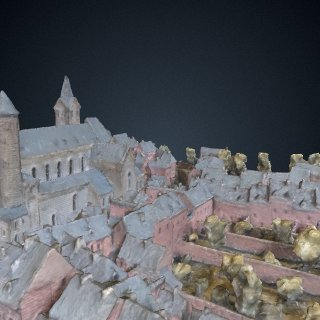
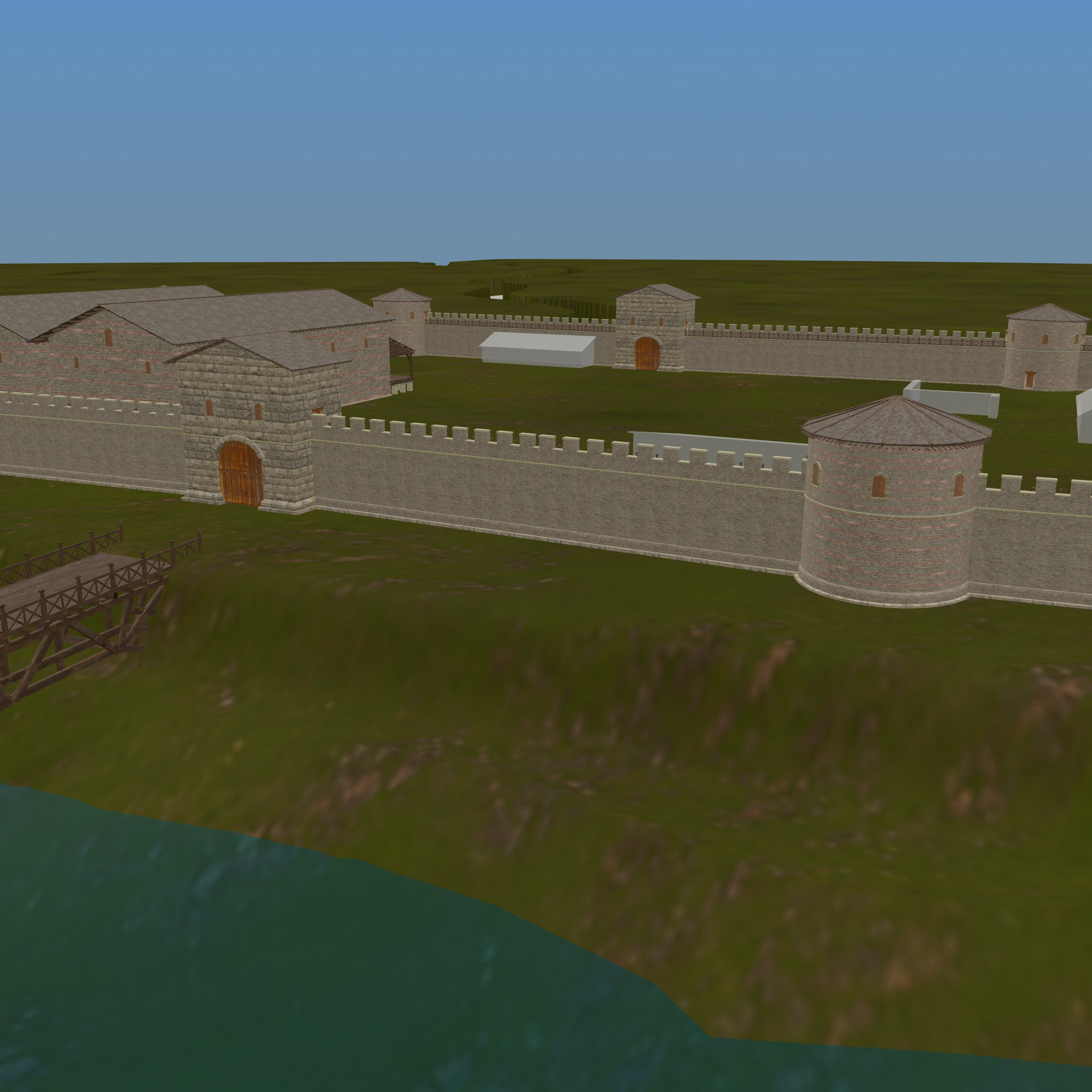
The Onze Lieve Vrouweplein, or Basilica of Our Lady, is one of two prominent squares in the city of Maastricht that has witnessed more than two millennia of layered history. This project uses 3D modelling as a lens to explore how the square’s function and meaning have continually evolved. Once a strategic Roman military zone, later a centre of religious authority, and today a vibrant social and cultural meeting place, the square reflects shifting relationships between power, belief, urban life, and community.
By combining different forms of three dimensional representation—historical maquettes, digital digitisation, and archaeological reconstruction—the project brings together disparate historical moments into a shared spatial narrative. Together, these approaches highlight how 3D technologies can bridge archival sources, material remains, and contemporary experience. Rather than presenting fixed reconstructions of the past, the project foregrounds interpretation, uncertainty, and continuity—showing how the Onze Lieve Vrouweplein has repeatedly been reshaped in response to military, religious, and social needs. Ultimately, the project connects ancient and early modern transformations of the square to its current role as a living urban space where residents, students, and visitors gather, reflecting on how historical layers continue to inform collective memory and everyday life.