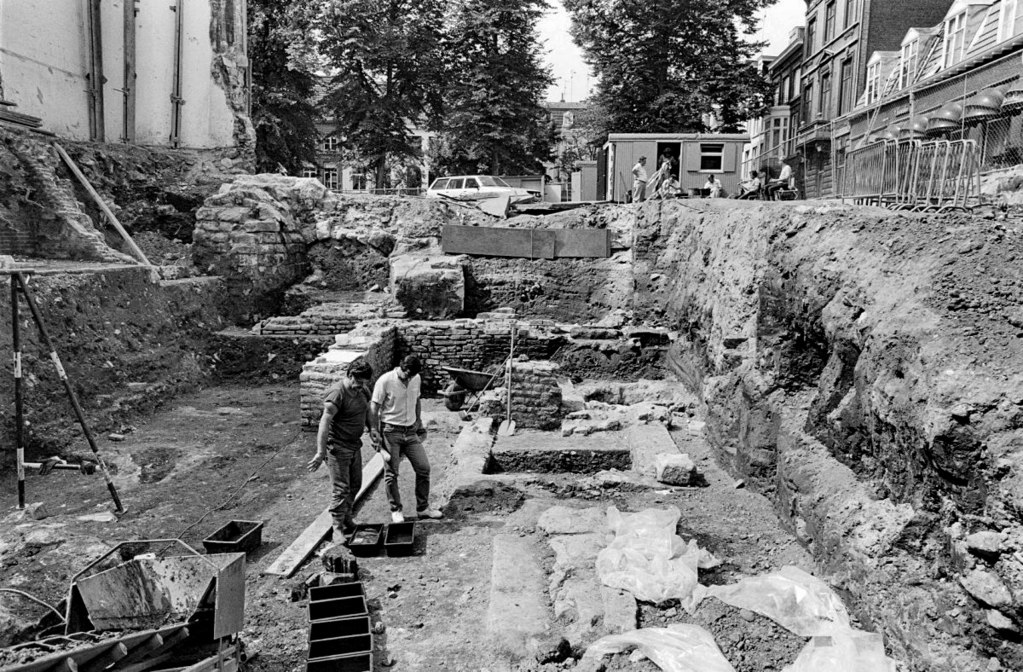
Beneath the cobbled streets of Maastricht’s bustling urban center lies a layered history of archaeological remains stretching back 2000 years — beginning with prehistoric flint mining to evidence for civilian and military Roman occupation that evolved into a centre of medieval craftsmanship. Later, a religious pilgrimage site establishes Maastricht as a flourishing city that witnessed Napoleonic sieges, the Industrial Revolution and now, university students and tourists. Like many other historical urban centres around the world, this aura of the past charms locals and visitors alike.
However, opportunities to unearth these historical moments under modern urban environments is rare. Due to high costs and resident disturbance, excavation can only be done when other necessary construction works are undertaken — such as renovations, new constructions or infrastructure improvements. The result is a series of quick investigations in small areas over the course of decades. While fruitful, these rescue excavations provide archaeologists with incomplete glimpses into the layered past of the city.