© Hans Peter Schaefer, 2005. Own work,
CC BY-SA 3.0, via Wikimedia Commons
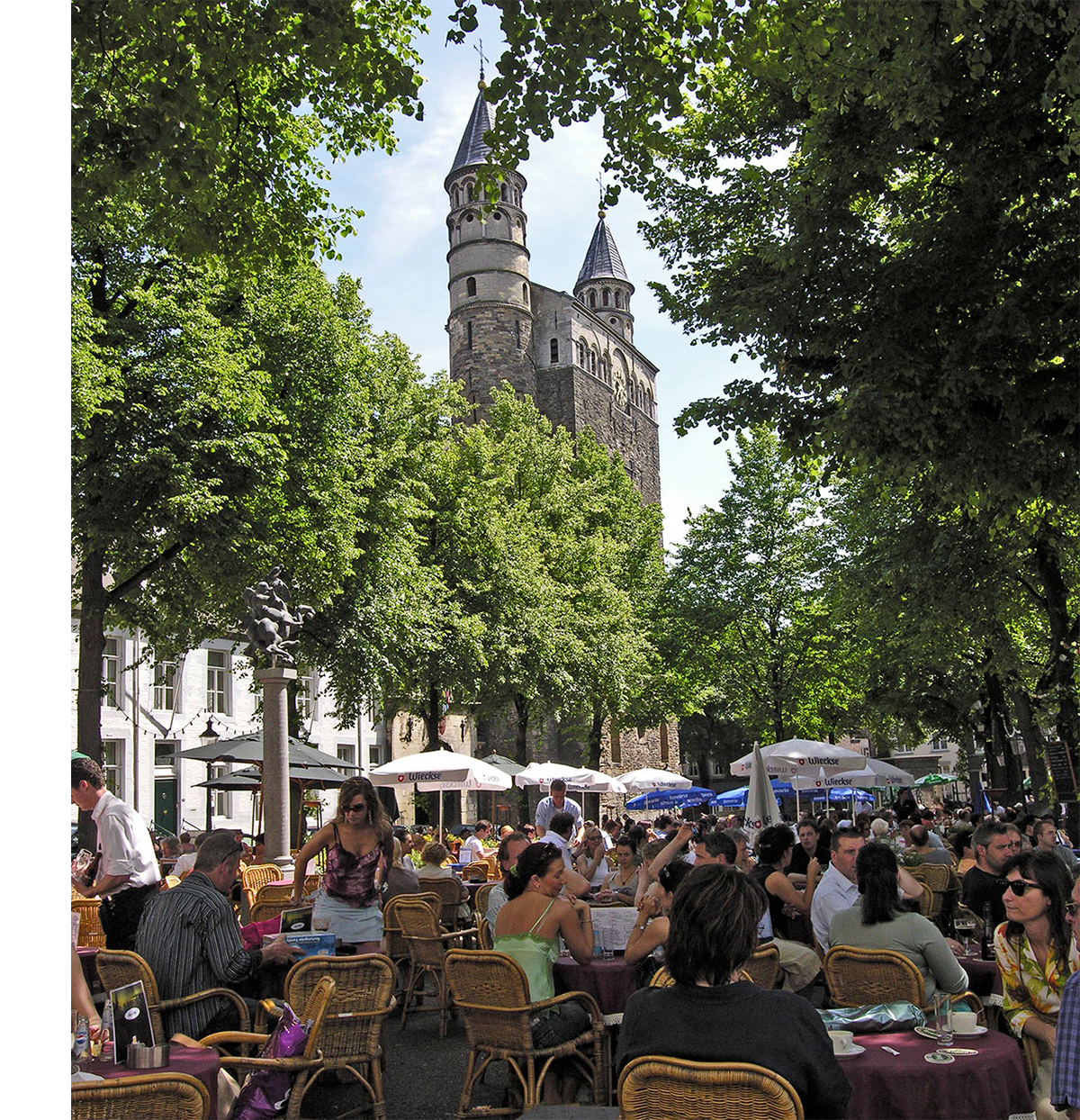
The Square of Our Lady (Onze Lieve Vrouwplein) is today a commercial, social and religious area of the city centre of Maastricht. In the last 100 years, the square and surrounding environs have seen a number of archaeological investigations. Some of the most significant findings have revealed the presence of a 4th century CE Roman military fortification, a castellum, that was built upon the ruins of an earlier civilian settlement.
Archaeologists date the construction date of the castellum to the time of Emperor Constantine I, c. 333 CE. This date matches with many other castra in the region that were built around the same time as part of a wider effort to reform and stabilise the empire after an extended period of social and political crisis. But there remains considerable gaps for understanding exactly the function and role of this castellum within the broader hinterland of the germanic border region, the Roman Limes, and how it fits within Constantine's political and military reformations. Understanding the spatial and temporal context leading up to the construction of the castellum at Maastricht helps to enrich an interpretation of the remains of the fort, thereby shedding light on the role of this and other smaller castra built within the Limes hinterland.