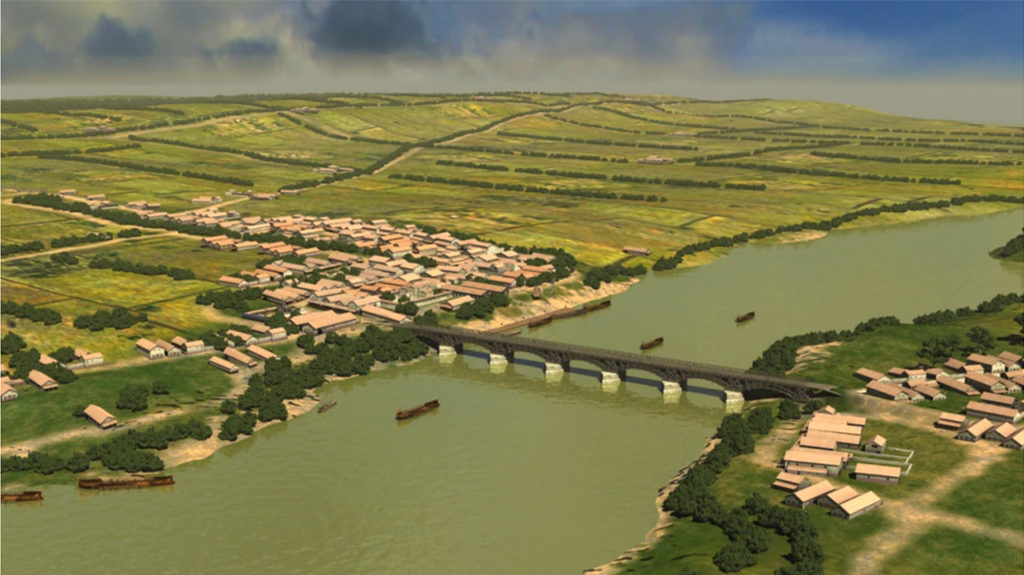
Located along the Meuse River, Maastricht is today the capital of the Dutch province of Limburg. But it was once a small, albeit strategic, river crossing along the Via Belgica Roman road network in which a wooden bridge was constructed by the military in the first half of the 1st century CE. Soon after this, a small civilian settlement, or vicus, grew around the bridge and small farming villas dotted the nearby landscape.
Archaeological remains from this period reveal key hallmarks of basic necessities for a small Roman community, including a bathhouse, mansia or inns for travelers, half-timber insulae (residential apartment buildings), an apothecary and a cobbler. Additionally, excavations unearthed a small sanctuary complex dedicated to the god Jupiter which included a temple, a well and a column with the god fixed on the top. Along the road leading away from the sanctuary and just outside of the urban settlement was a necropolis, marked by funerary statues of the local population. At this time, there is no evidence of protective fortifications surrounding this community.
The geographic location was also favourable as it was situated near the delta mouth of the Jeker River. The site was therefore an important transport juncture in which heavy building materials, fragile goods and agricultural products arrived and could then be redistributed in every cardinal direction by either road networks or by riverine transport.