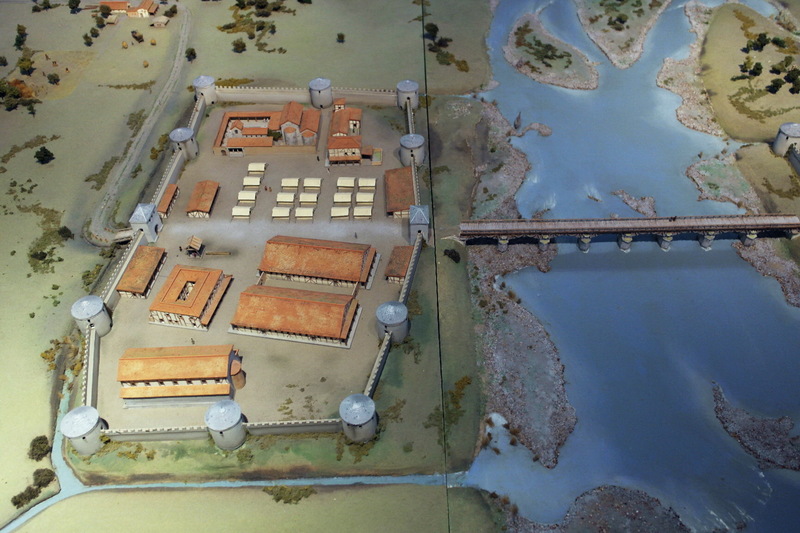
After a period of some 60 years of decline, resettlement of the Maastricht environs took on a decidedly different character. The reoccupation of the urban settlement and rural landscape went from local civilian administration to control by the Roman military. The castellum was constructed on top of the vicus settlement and included thick fortification walls, a v-shaped ditch, round towers and two gated points of entry and exit. Coincidently, the city of Tongeren built new walls in the early 4th century around a decidedly smaller site than the previous settlement, coinciding with the estimated construction date of the Maastricht castellum (van der Meulen, 2017). Evidence for the interior remains sparse, leading to many questions about what was repurposed from the civilian settlement and what was newly built for this second phase of occupation.