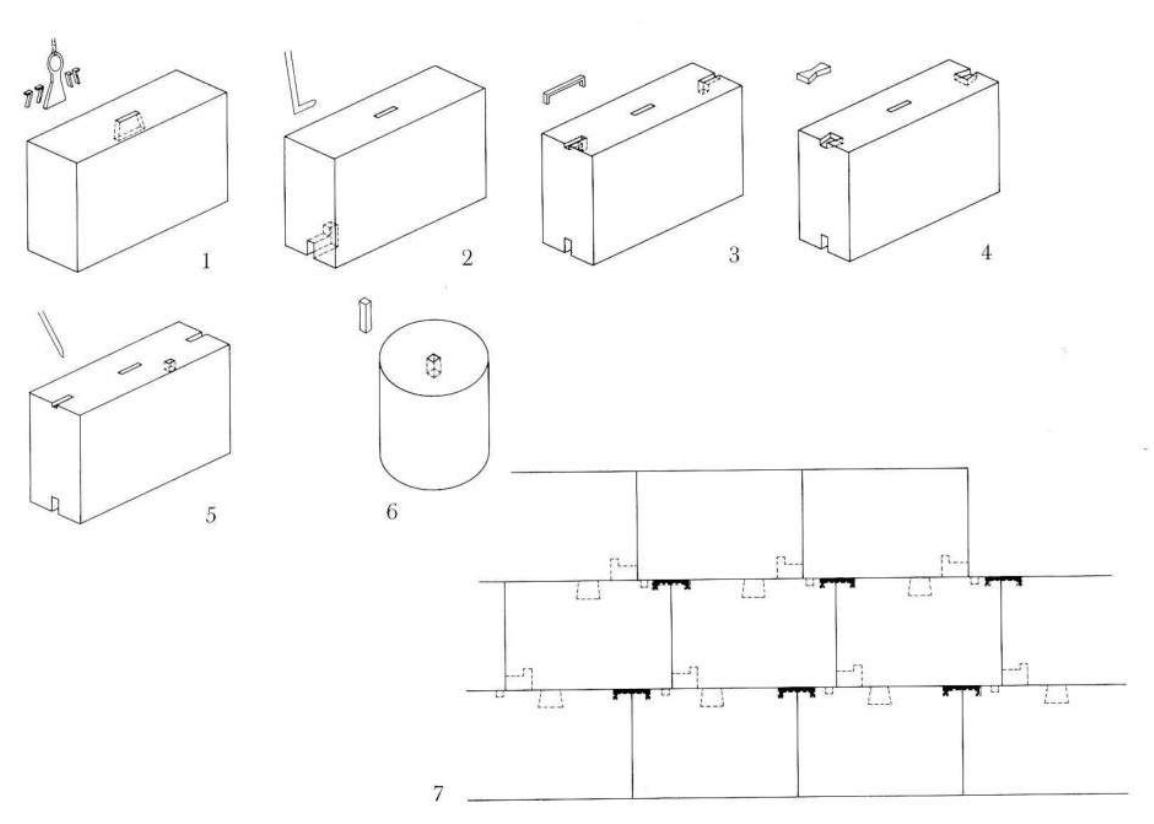
Much of the known construction techniques for the gates is based on the 1983 excavation at the Hotel Derlon, in which the entire southern tower of the western gate was revealed (Panhuysen 1984). Taken together, the two gate towers provided an opening of 3.40 meters wide (Panhuysen 1996). Each tower was itself a solid construction of 6 by 3.2 meters and protruded approximately 2 meters from the wall on both sides. Unlike the walls and towers, the gate towers were constructed using the opus quadratum technique — they consisted of large Jurassic limestone and sandstone facing blocks fixed together with iron anchors and no mortar with an inner fill consisting of stone material debris and mortar. The variety of stone types and architectural fragments of the inner surface indicates the gate was largely constructed from spolia from the previous occupation period.
Portions of the Roman road as it traverses the castellum were also unearthed from this 1983 excavation as well as a 1990 excavation at Achter de Comedie 12 in which the 4th century re-route of the north-south connection of the Roman road was revealed about 70 meters west of the enclosure (Panhuysen 1991). The excavation placed the topmost layer of the road to be at 46.60+ NAP* — more than one meter below the construction level of the fort and more than two meters above the deepest point of the v-shaped ditch. This indicates the surface level of the fortified area was slightly elevated for a higher, more strategic position, likely using the soil removed for the ditch enclosure.
* Normaal Amsterdams Peil or Amsterdam Ordnance Datum