The location, width and construction technique and materials of the walls in this 3D reconstruction are based on reliable archaeological evidence summarised by Panhuysen (1996) and Wetzels (2017). Selected illustrations from Panhuysen (1996, 2006) were used directly in 3D space to generate the lower wall sections.
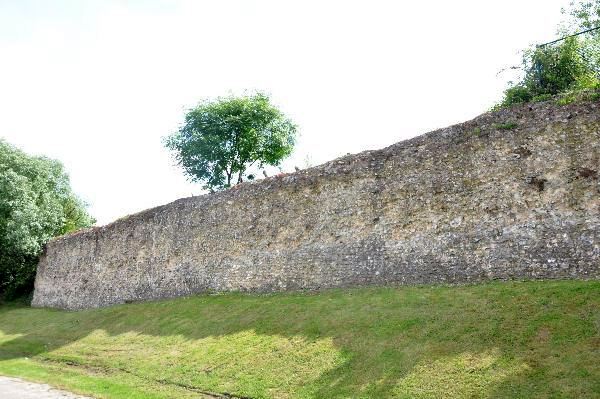
In addition, a project team site visit to the exposed archaeological remains located in the Derlon Hotel cellar exhibition, displaying the 1983 excavation of that area on the Square of Our Lady. This visit provided first-hand exposure to this element of the fort. Some photos were taken and used for informing the overall surface character of the walls.
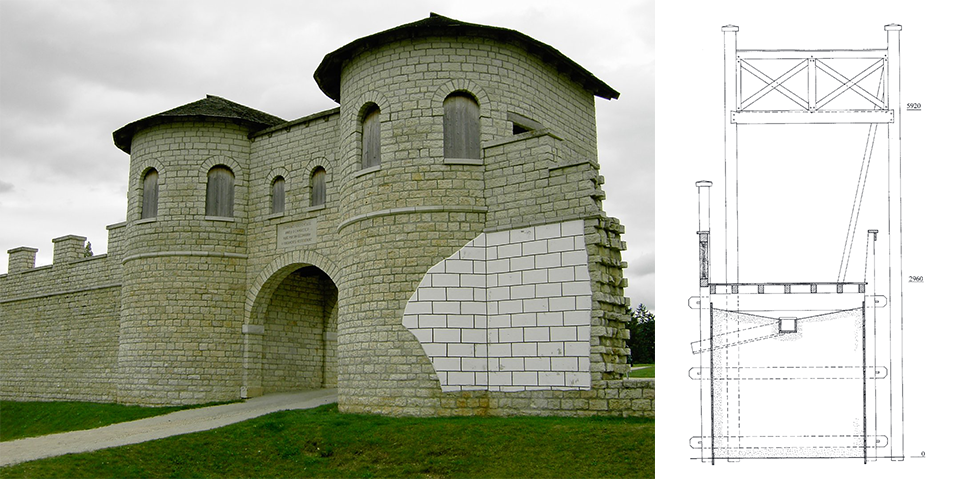
However, the upper sections of the walls required secondary resources from similar reconstructions of late Roman brick and stone walls, such as the 3D modelling report on the rampart walls of the Horbourg-Wihr Castrum by T. Nivola/INSA. This 3D model and the reports informed many aspects of the Maastricht castellum reconstruction. As well as images from the physical reconstruction of the Biriciana castrum in Bayern, Germany and the graphic reconstruction of a wooden palisade fence by Kees Peterse/PANSA BV 2010. Due to the proximity, timeframe and overall similarities between Maastricht and Tongeren, the archaeological evidence from Tongeren also helped to inform the situation of the walls, towers and gates at Maastricht.
UNCERTAINTY SCALE