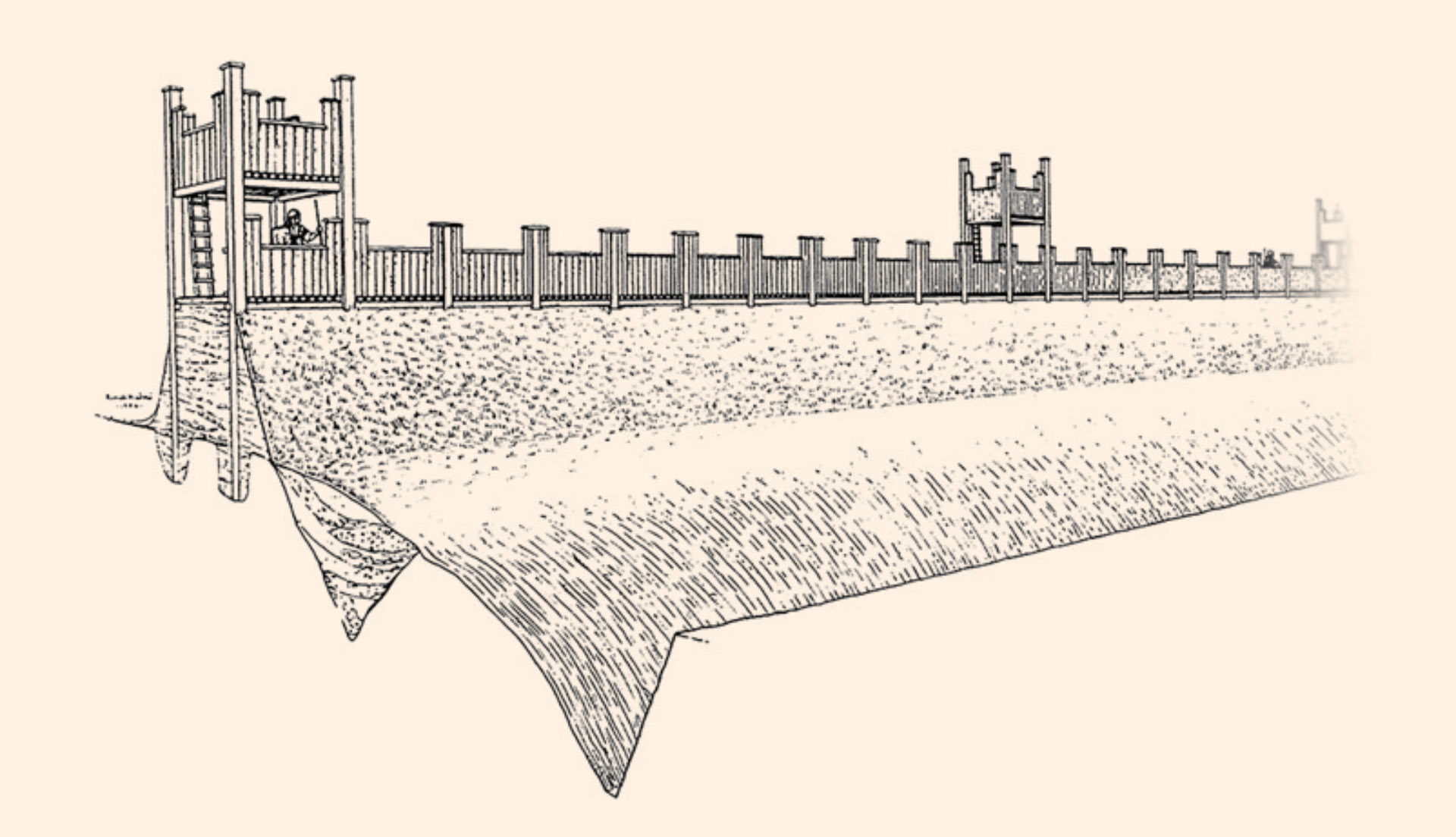
Roman fortifications adopted a standardised, layered defensive system, combining ditches, rampart walls of wood, earth or stone, towers and gates as active defence components that deterred and slowed attackers while maximizing the defenders' advantages. While the early civilian settlement at Maastricht required no such defences during the stable Middle Roman period, this situation changed in the 4th century when the area was re-occupied for military purposes. The newly built castellum, covering only 1.53 hectares, was relatively small and likely housed a limited number of permanent garrison troops (limitanei) as well as potentially temporary small mobile units (comitatenses).
One or more ditches cut around the fort’s perimeter were often the first layer of defence. At Maastricht, a V‑shaped ditch (fossa) surrounded the fort in a U-shape on the northern, southern and western sides. The eastern side of the castellum relied on the steep embankment of the Meuse as a natural defence.
V‑shaped ditches were effective both tactically and structurally. Their steep sides hindered attackers and reduced the risk of collapse, while a narrow flat surface at the bottom allowed for regular clearing of debris. Although Roman army ditches generally remained dry, the Maastricht example was likely affected by rising river levels and may have functioned as a partial moat during certain seasons.