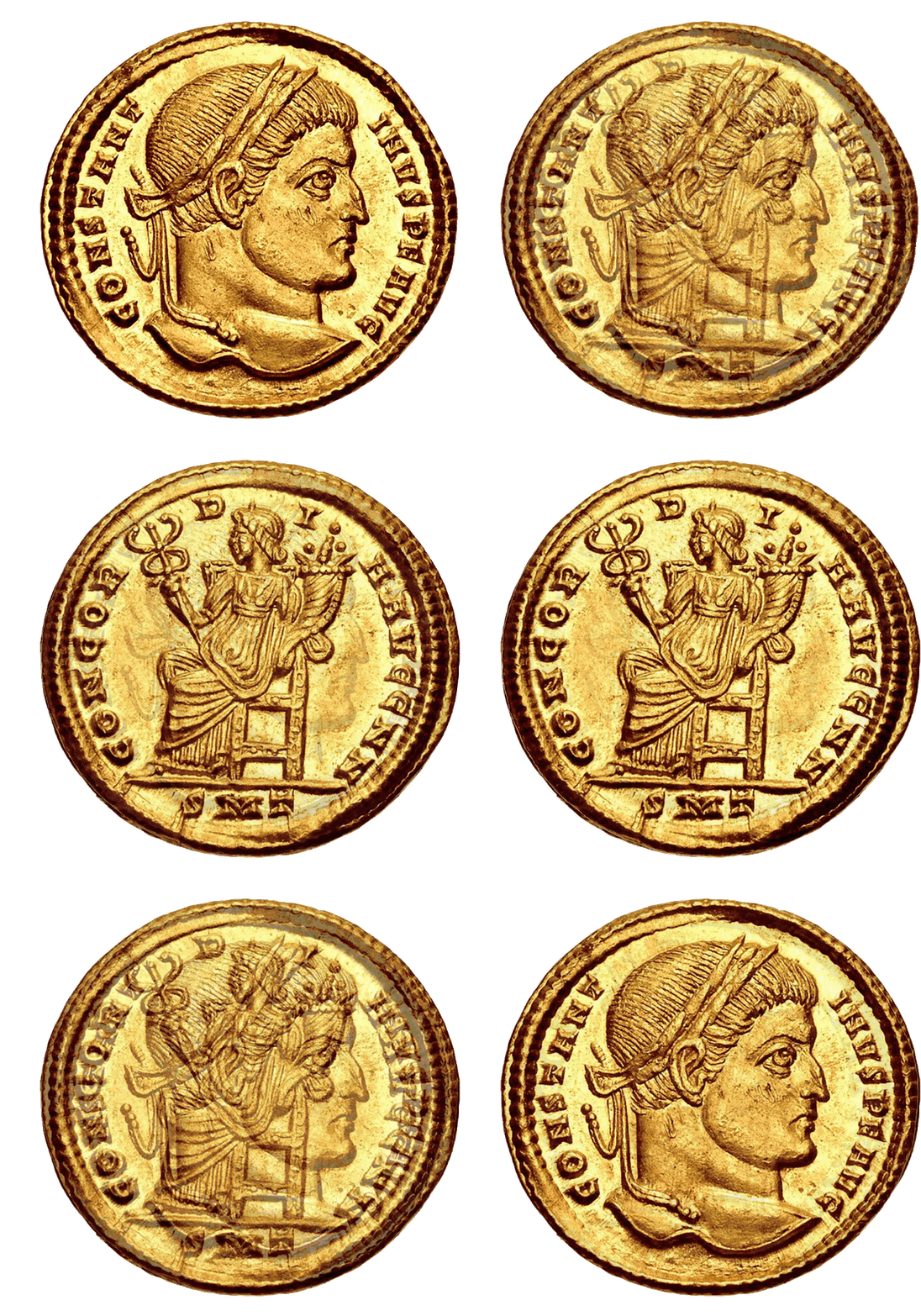
Solidus of Constantine I, 320 CE. © Classical Numismatic Group, Inc.
CC BY-SA 2.5, Wikimedia Commons
The early fourth century marked another civil war as a result of the breakdown of the Tetrarchy system of co-rulership. It wasn’t until 324 CE that Constantine I became sole ruler of the Roman Empire. His reign is marked by a number of reforms that sought to strengthen the recently reunified empire, including the separation of civil and military authorities, the introduction of the gold solidus coin to stabilise and standardise currency, and the reorganisation of the Roman army into mobile units (comitatenses) and frontier-garrison troops (limitanei).
In addition to these reforms, he continued his predecessors’ campaigns to resettle territories abandoned during the Crisis of the Third Century with civilian and military outposts at strategic locations along established Roman transit routes. The motivation for these resettlements was to ensure the protection of communication and trade networks throughout the empire (Whittaker, 1994; Bloemers, 1983a; Issac, 1990). The castellum of Maastricht was one such resettlement effort, done to regain firm control of this road network and riverine juncture.
Solidus of Constantine I, 320 CE. © Classical Numismatic Group, Inc.
CC BY-SA 2.5, Wikimedia Commons